


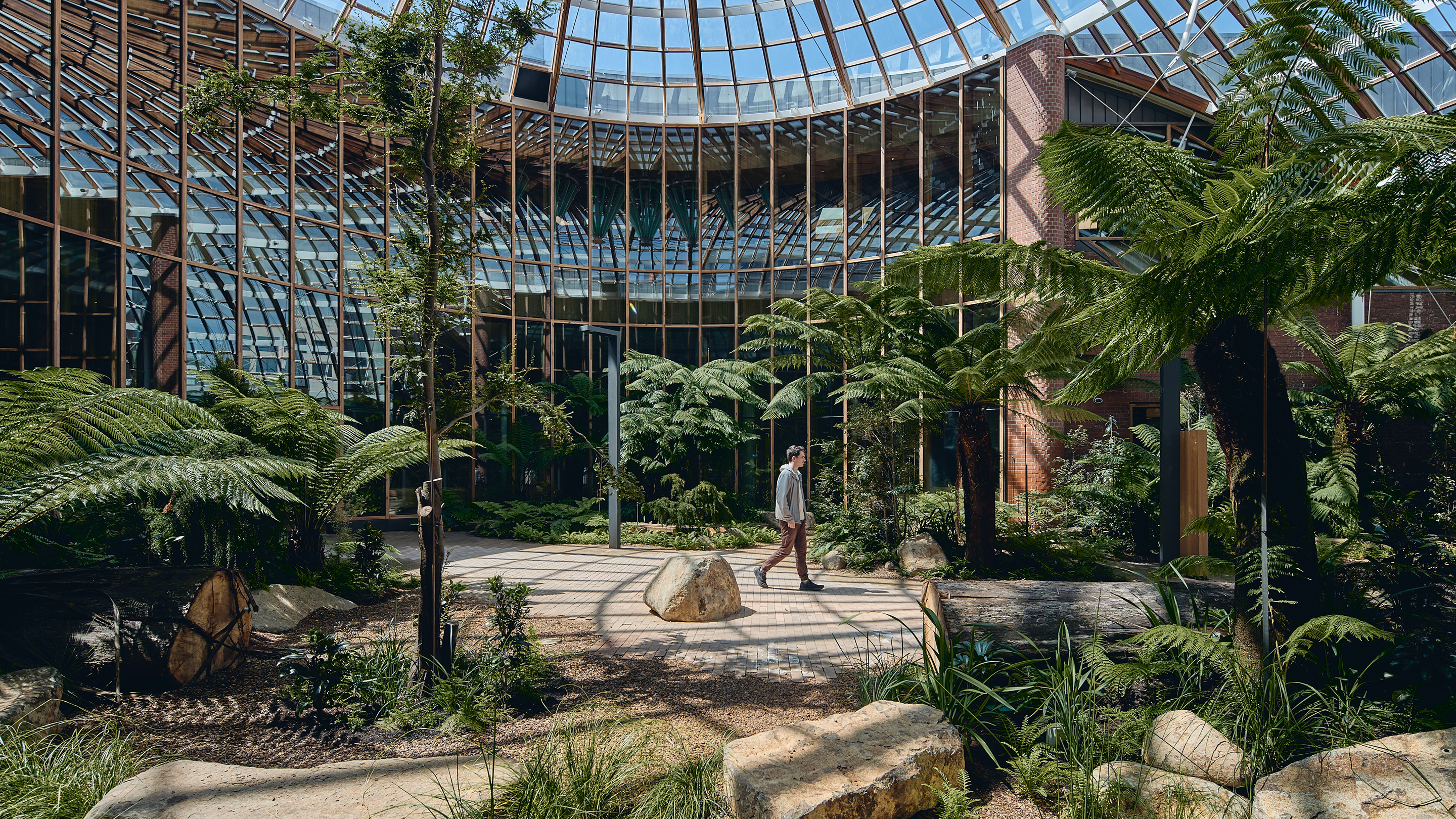
The Forest revitalises, adapts and activates the University of Tasmania’s heritage Forestry building, establishing a new CBD campus for the Tasmanian School of Business and Economics, Humanities, Social Sciences, and University College.
Connectivity creates community, exchange and campus life.
The Forest is the University of Tasmania’s flagship Hobart campus, providing an inner-city hub for learning, research, collaboration, and community. Designed by Woods Bagot, it is a highly connected campus that weaves together existing structures and new interventions with integrated landscape, through-block connections, and publicly accessible thoroughfares, creating a civic destination embedded in the city.
The forested atrium that sits beneath a restored heritage-listed 22-metre-wide glass dome forms the civic heart of the project. Underscored by a strong connection to place, the design engages the senses through honest materials, natural light, fresh air and integrated landscaping, creating a rich tactile experience that celebrates texture, material authenticity and longevity.
The Forest is an ambitious, sustainability-led project with end-of-life considerations embedded throughout, closely aligned with Living Edge’s ‘Furniture for Life’ philosophy.
Tim Bachelor, Senior Project Consultant, Living Edge
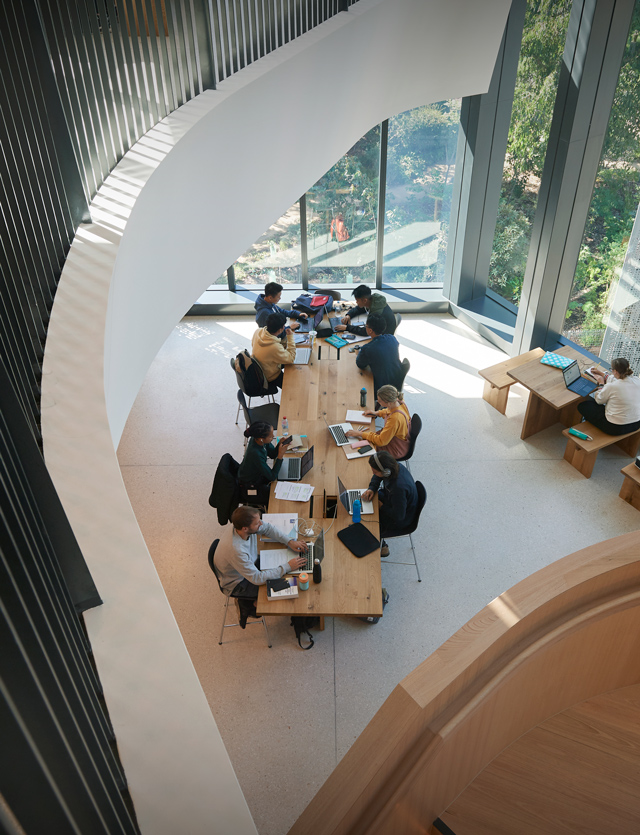
Woods Bagot Interior Design Leader Phoebe Settle said the interior scheme was conceived as a “living landscape,” supporting contemporary learning through flexibility, wellbeing, and integration with the natural environment. The spaces were designed to be highly adaptable, offering varying levels of ergonomics, comfort, and adjustability to ensure every user is considered.
Leading into the learning landscape, a sweeping timber gesture negotiates the site’s level changes, creating a welcoming arrival space with layered degrees of privacy and connectivity. The material palette is warm and tactile, prioritising local, natural materials used in their unadulterated form, including exposed brick, natural timber, and hempcrete.
The interiors are designed for flexibility and inclusivity, supporting a diversity of uses, moods, and learning styles. As Woods Bagot Interior Design Leader Phoebe Settle notes, the design “caters to a diversity of spatial types, supporting collaboration and quiet focus alongside vibrant civic spaces,” while also “inviting people into the heart of the space” as a campus “of and for the city.”
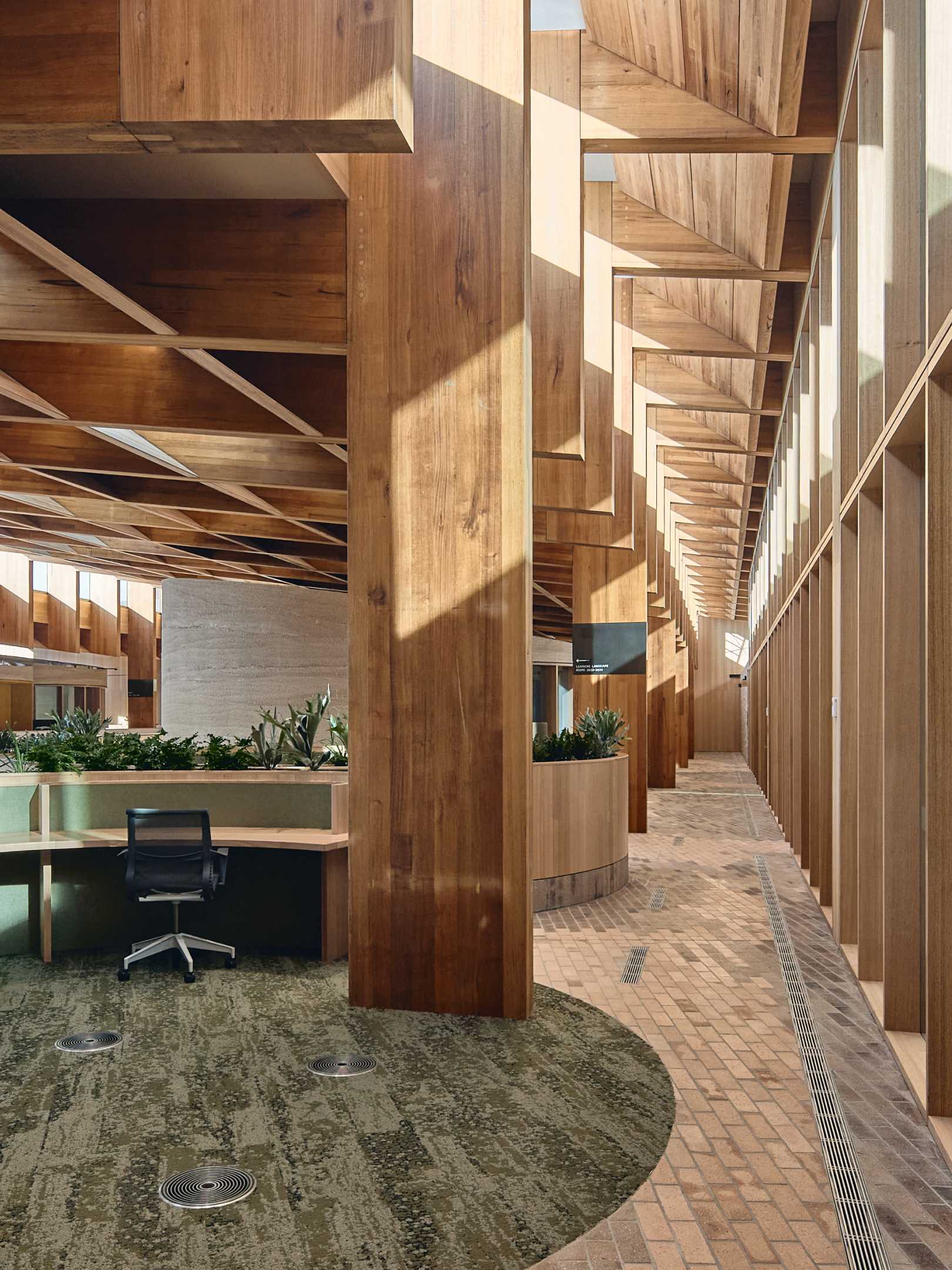
Sustainability is embedded throughout the project, informing both architectural and interior outcomes. Guided by an ambitious carbon reduction target, every decision prioritises longevity, adaptability, material efficiency, and future disassembly.
There’s an expansive sustainability story that we are feeding into the many layers of this project. For the Forestry Building, we are looking ahead 50-100 years and thinking about how the choices we make now are going to play out then.
Phoebe Settle, Associate, Woods Bagot
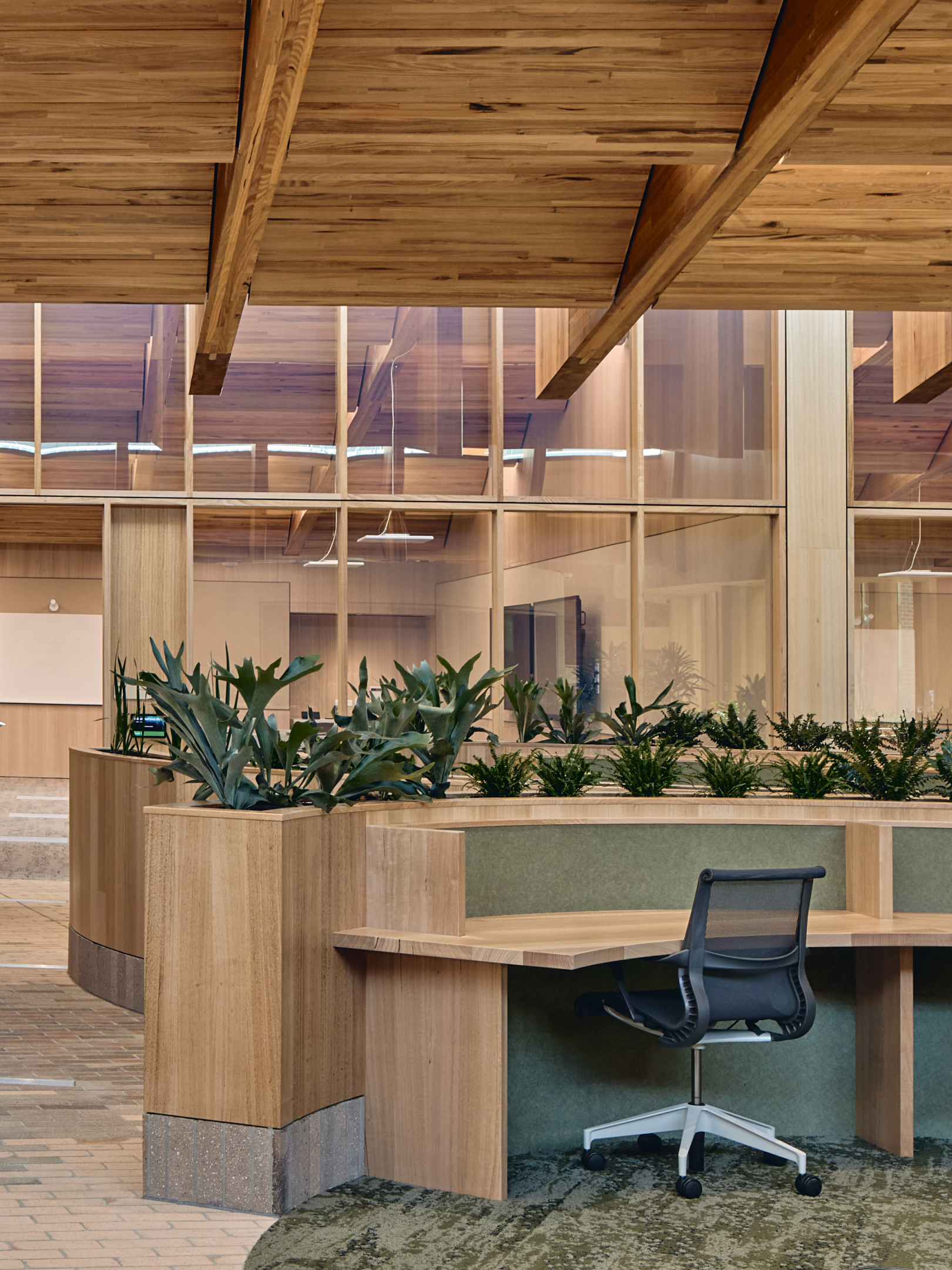
Living Edge supplied 150 Herman Miller Setu Chairs across the project’s meeting spaces. Selected for their alignment with both the sustainability ambitions and architectural language of the campus, the chairs combine high recycled content and recyclability with ergonomic responsiveness and a refined industrial aesthetic.
Setu Chair
Herman Miller
Designed with 54% recycled content and up to 90% recyclability at end of life, Setu reflects a considered approach to material stewardship, supported by a 12-year warranty that reinforces its longevity. Its responsive kinematic spine adapts to movement without manual adjustment, delivering immediate ergonomic support, while its lightweight, refined form and industrial aesthetic balance performance with visual clarity.
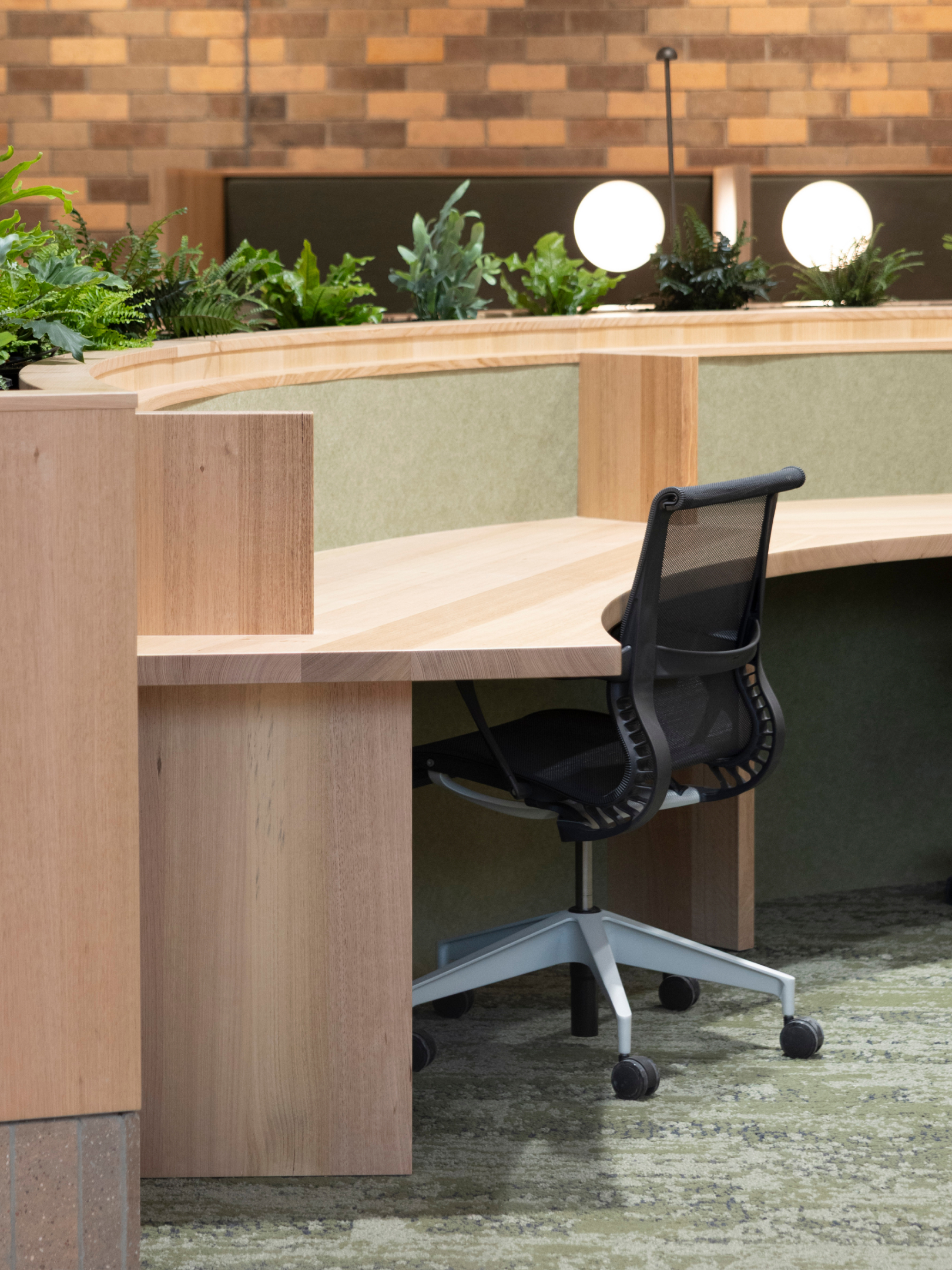
Chosen for its sustainability credentials and intuitive comfort, Setu supports the flexible learning environments at The Forest through a lightweight form that complements the architectural intent of the space.
Tim Bachelor, Senior Education Consultant, Living Edge
The campus transforms existing heritage elements into a rich, sensory learning environment, resulting in a highly responsive space that balances function, comfort, and long-term use.
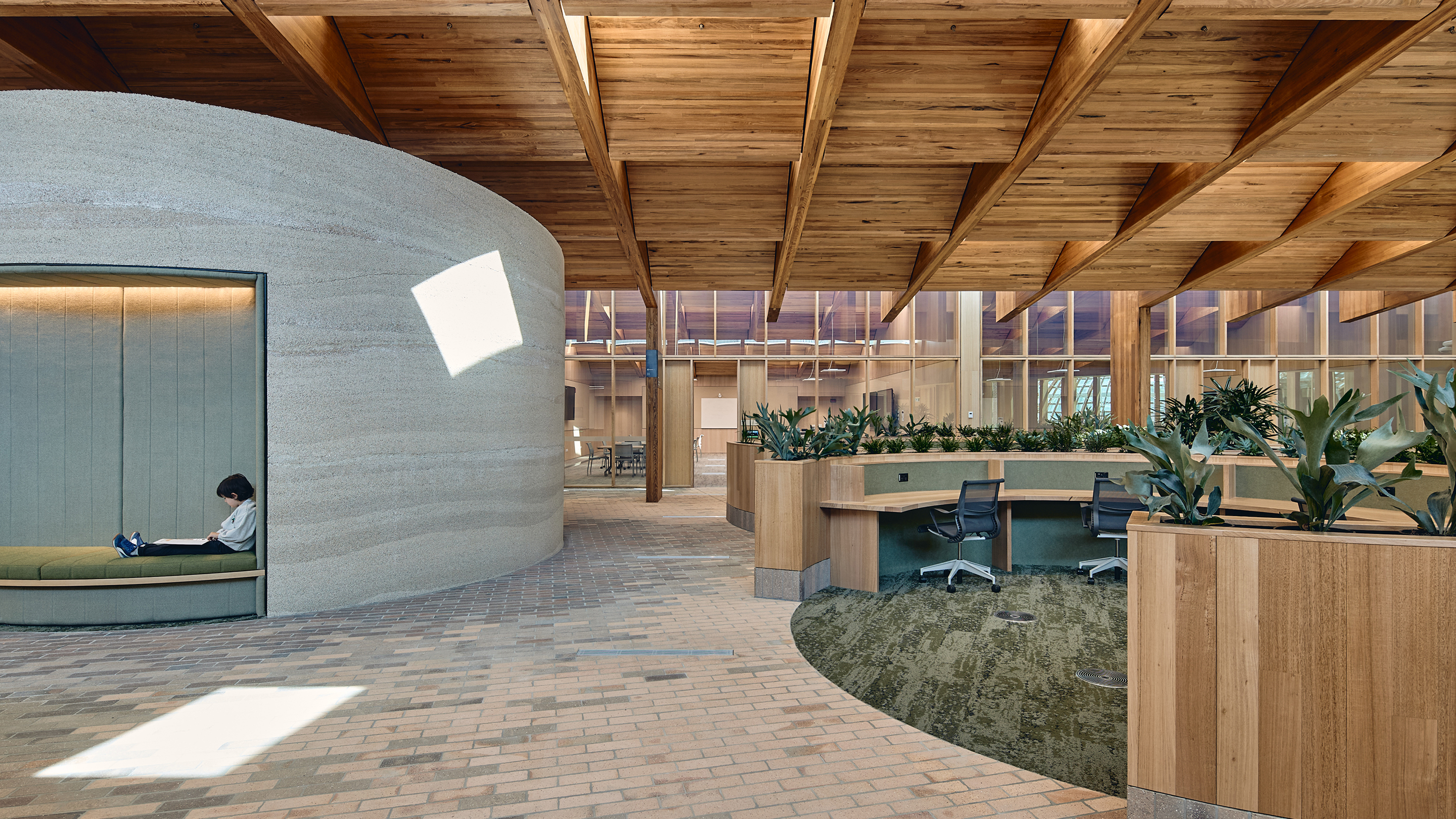
The project was awarded the Premier’s Award at the 2026 Australian Interior Design Awards. The jury unanimously agreed that The Forest is deserving of the award because of the innovation evident across its design, including its mix of materials and use of hempcrete in a commercial application, as well as the overall consideration given every space.
Credits
Woods Bagot
Arup
Peter Bennetts