



2026 marks 100 years since the birth of Danish design pioneer Verner Panton. This year, Vitra—together with the Vitra Design Museum and the Panton family—will present a year-long program of exhibitions and initiatives to celebrate his legacy.
Born in Denmark in 1926, Verner Panton studied at Odense Technical College before enrolling at the Royal Danish Academy of Fine Arts in Copenhagen as an architecture student. He worked in the architectural firm of Arne Jacobsen from 1950-1952, before he founded an independent studio for architecture and design in 1955.
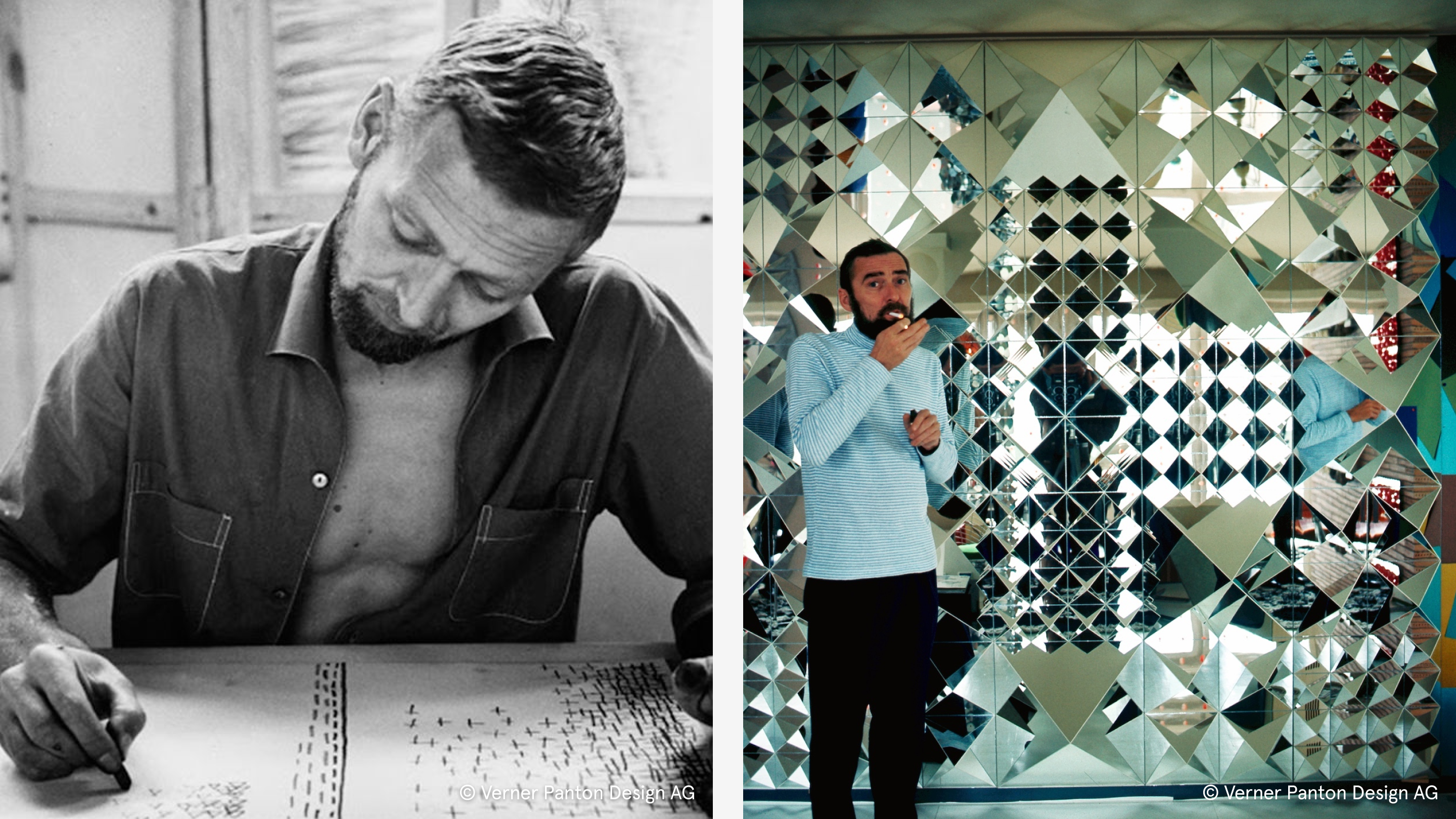
He first gained wider recognition with the geometric furniture he designed for Danish furniture manufacturer, Plus-linje, before going on to create numerous influential pieces in seating and lighting.
Panton became known for his bold, experimental approach to material, shape, and colour. Believing that colour is a powerful tool that could alter perception and mood, he sought to create designs that triggered an emotional response.
“The main purpose of my work is to provoke people into using their imagination. Most people spend their lives housed in dreary, grey-beige conformity, mortally afraid of using colours.”
– Verner Panton
Verner Panton & Vitra
Panton's collaboration with Vitra began in the early 1960s, when they jointly developed a prototype for a radically new S-shaped chair. What became his best-known design, the Panton Chair was introduced in 1967—the first cantilever chair to be moulded from a single piece of plastic. This was also the first independently developed product by Vitra. Today, it remains one of the most recognisable and influential icons of 20th-century furniture design.
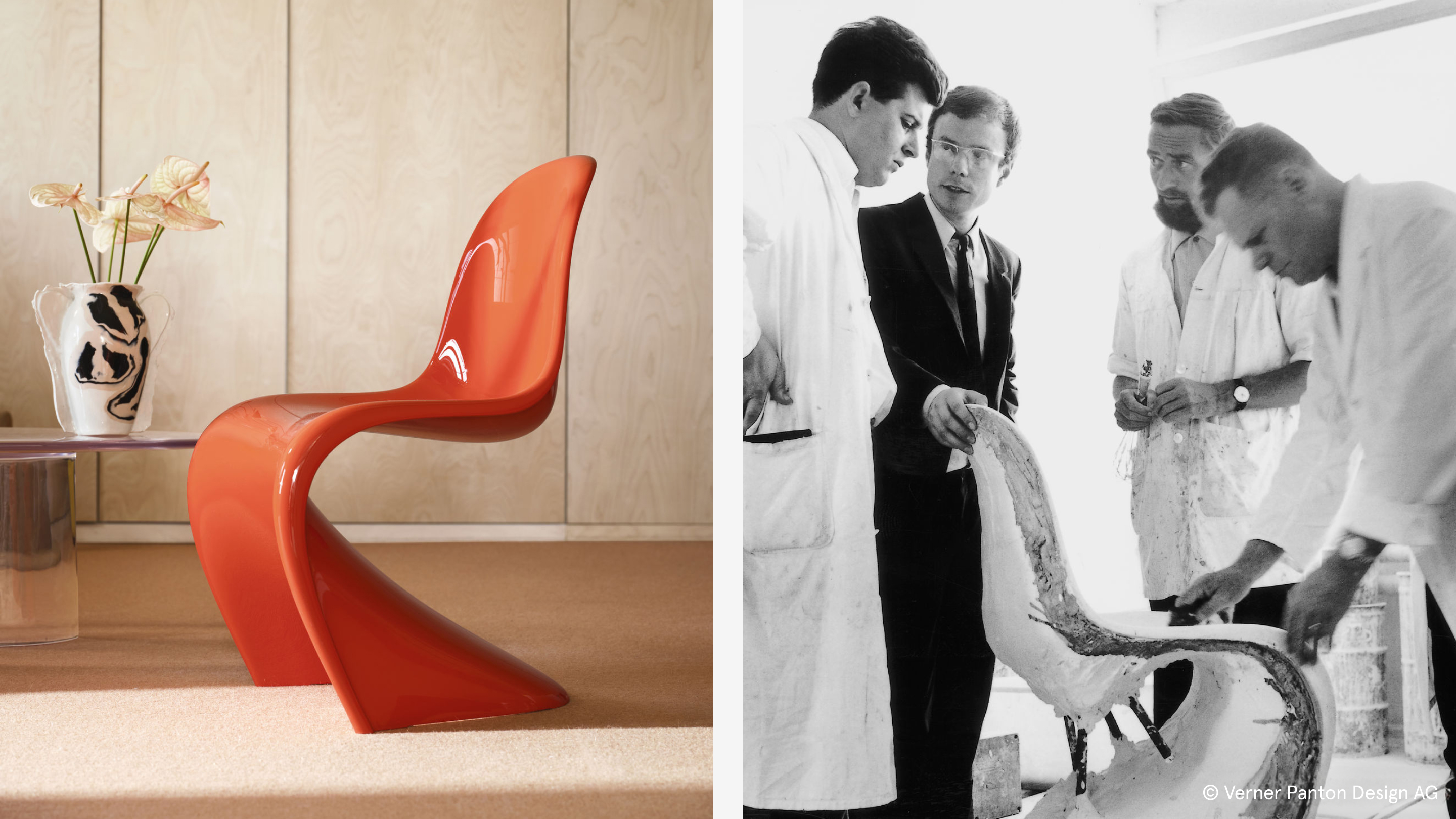
This year, Vitra—together with the Vitra Design Museum and the Panton family—will present a year-long program of exhibitions and initiatives to celebrate his legacy, including updated designs in new fabrics and leathers, exclusive limited editions, and the reissue of one of Panton’s most playful and iconic works.
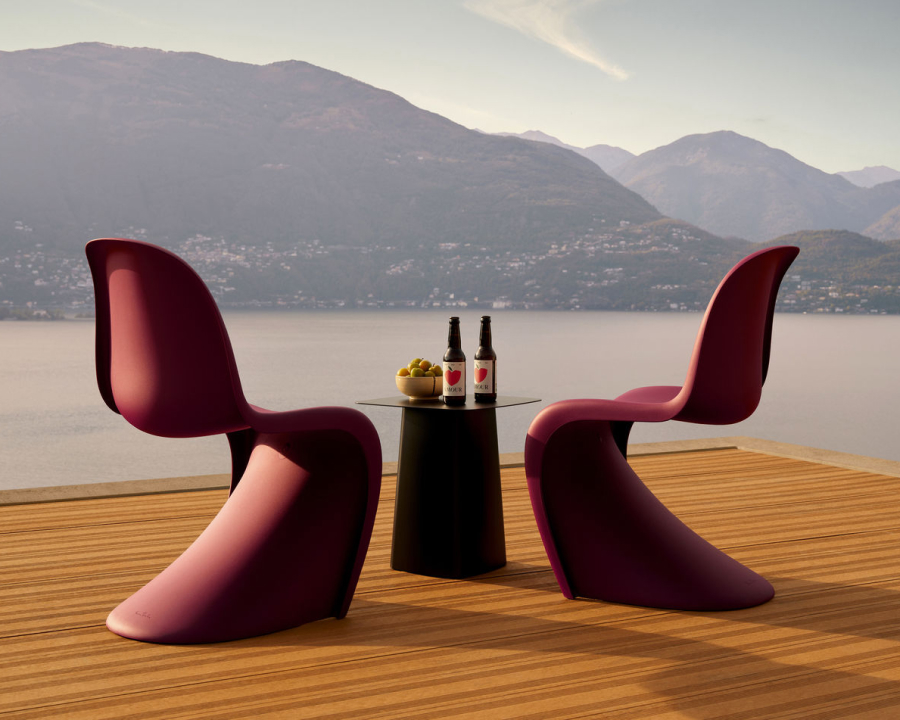
Panton Chair
Crafted entirely from durable, moulded plastic, the Panton Chair is both visually striking and surprisingly ergonomic. Its gentle curves follow the body’s natural contours, while its cantilevered base offers flexibility and comfort without the need for traditional legs or joints.
Lightweight and stackable, it transitions effortlessly between indoor and outdoor use, making it as practical as it is artistic.
The professional collaboration between Verner Panton and Vitra evolved into lasting ties with his family, who remained in the Basel area, where his wife Marianne still resides today.
Verner Panton & Vitra Design Museum
The Vitra Design Museum maintains one of the important collections of Panton designs. These holdings serve as a key resource for exhibitions, loans and publications and for Vitra’s own design development projects.
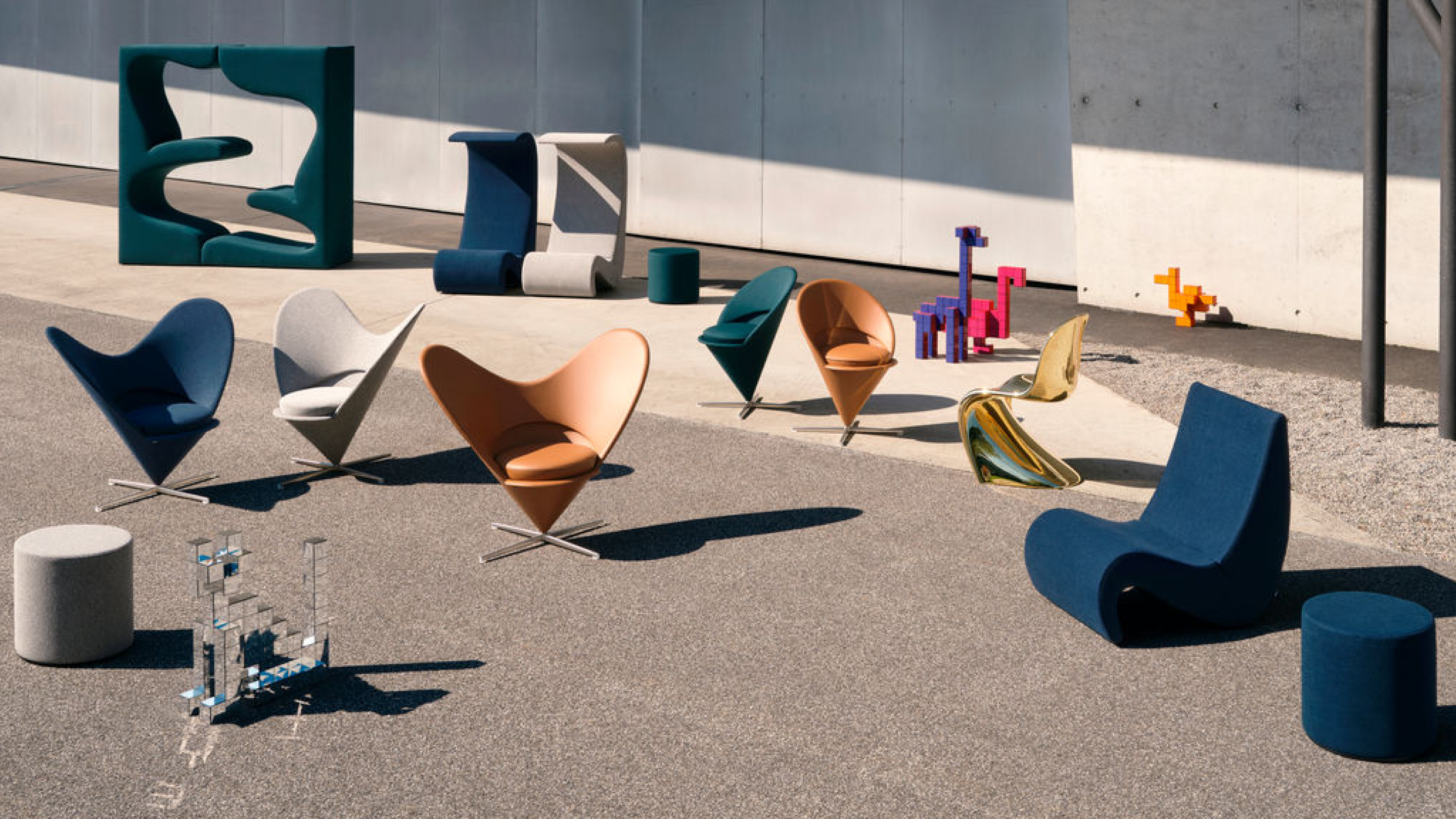
In 2000, the Vitra Design Museum presented a comprehensive retrospective of Verner Panton’s work, and a new exhibition will open in May 2026 to commemorate the 100th anniversary of his birth.
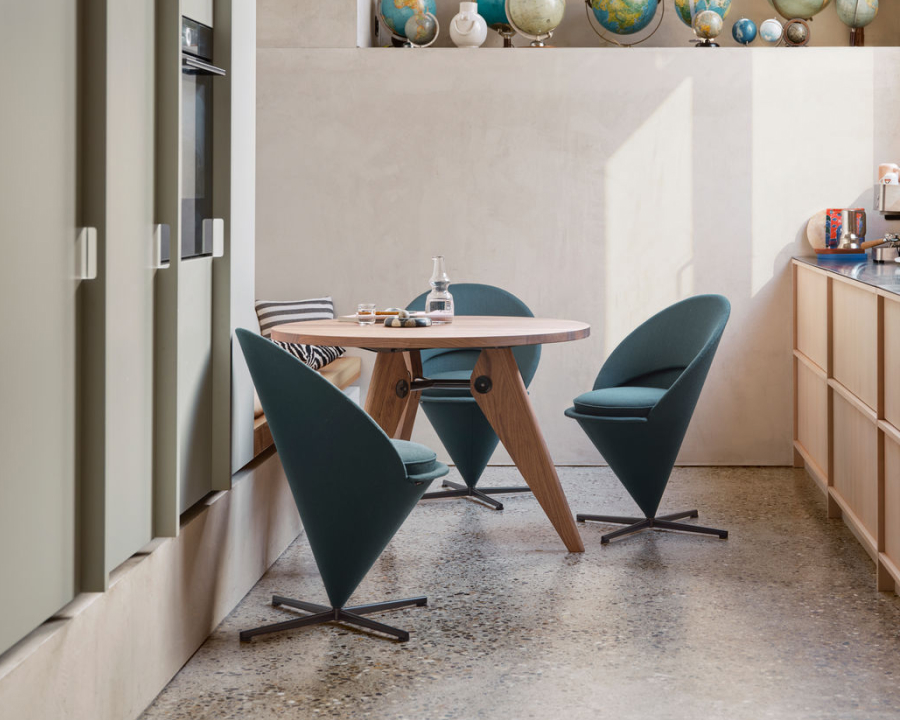
Cone Chair
Verner Panton originally designed the Cone Chair for a restaurant in Denmark. The radically new aesthetic of the Cone Chair changed the perception of what a chair could be and marked the first expression of what would become Verner Panton’s signature design language.
The Cone Chair takes its shape from the classic geometric figure for which it is named. The padded shell forms the back and armrests and, together with the soft seat cushion, creates an exceptionally comfortable armchair, which is mounted on an elegant brushed or powder-coated stainless steel swivel base.
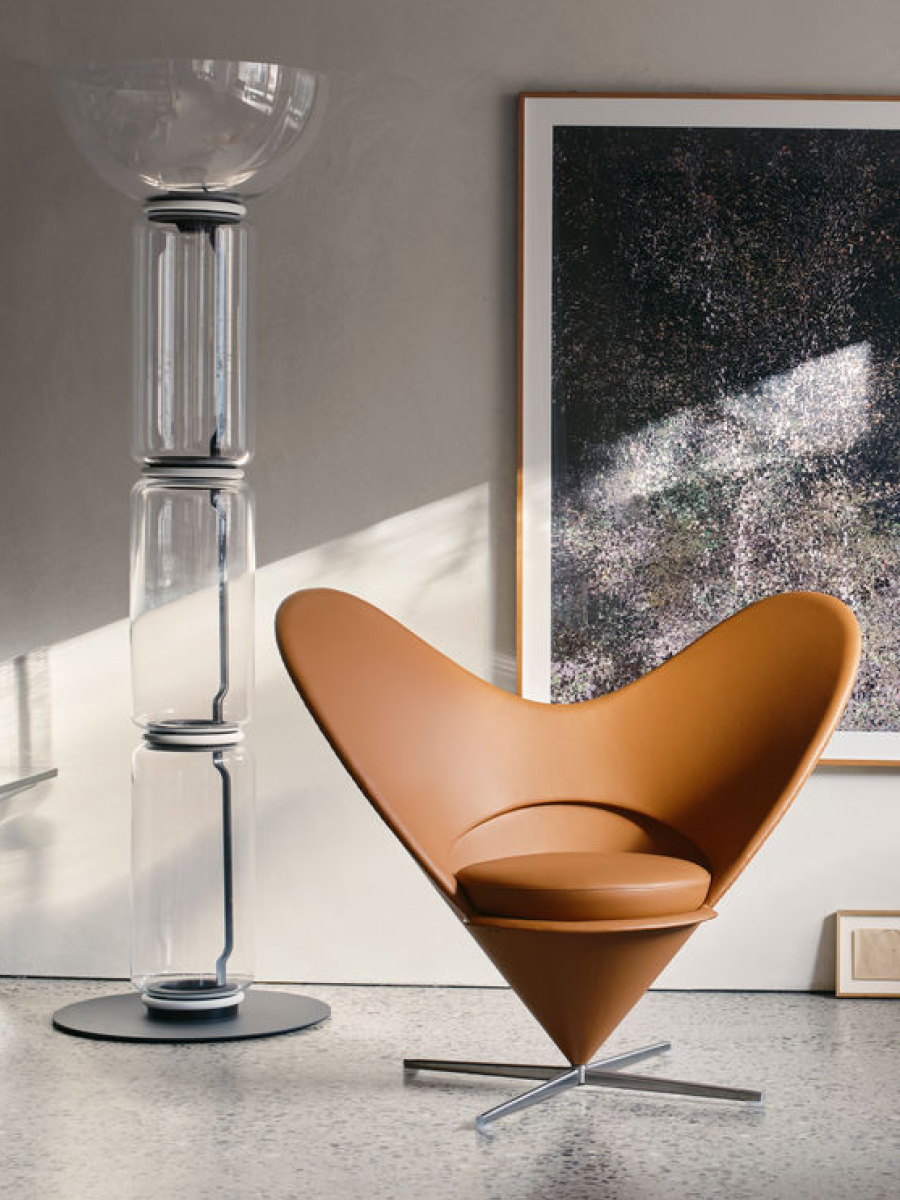
Heart Cone Chair
Following the enthusiastic reception of the Cone Chair in 1958, Verner Panton went on to create the Heart Cone Chair. The design quickly became a well-known icon thanks to its sweeping, heart-shaped backrest.
Combining a comfortably upholstered seat with an understated, elegant base made of satin brushed or powder-coated stainless steel, the chair allows ample freedom of movement, while its padded upholstery ensures soft seating comfort.
Verner Panton passed away in 1998 in Copenhagen. Vitra’s re-edition of Verner Panton’s designs reflects a longstanding partnership, continuing to champion and evolve the legacy of his work.