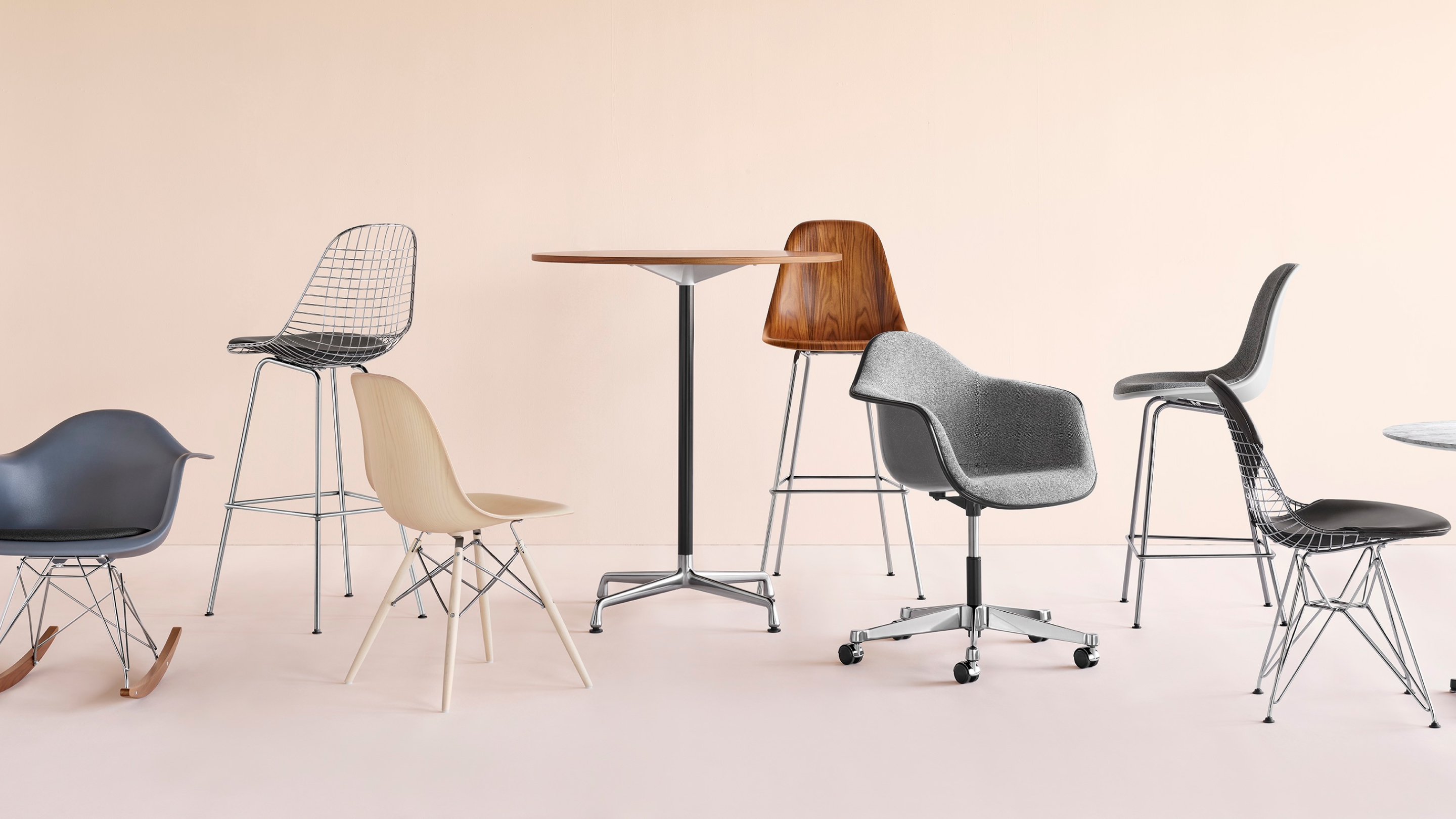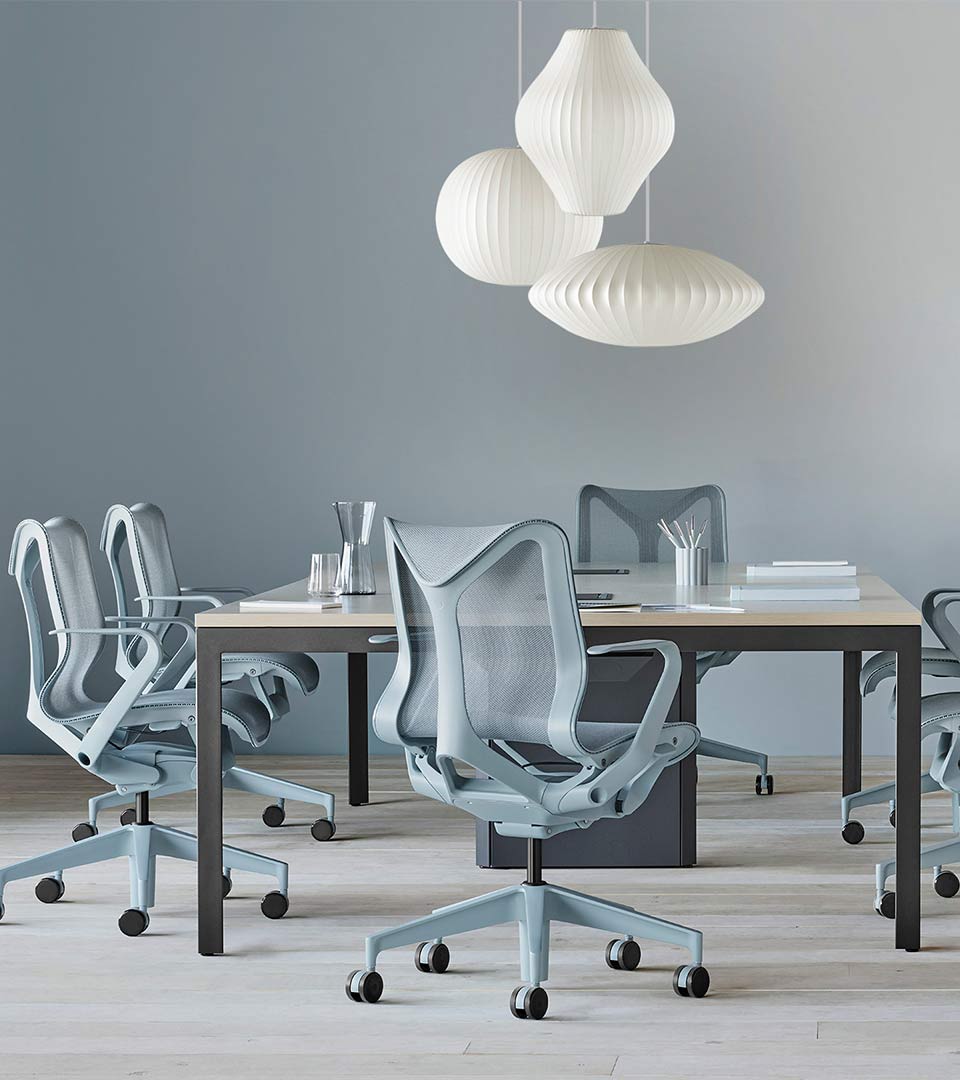



We resist the notion of ‘fitting the mould’ because it implies bending ourselves to match a predetermined shape, sacrificing individuality for conformity. Yet, for 75 years, the Eames Shell Chair has proved that the right mould can do the exact opposite.
The instantly recognisable silhouette of the Eames Shell chair is deceptively simple – an organic, flowing shell that feels at once familiar and fresh. But behind this apparent effortlessness is a history defined by experimentation, resilience, and an unwavering dedication to finding the perfect balance between form and function.
Pivot, perseverance, and the perfect mould
Charles and Ray Eames approached the concept of a single-piece shell with the same mix of optimism and rigour that defined their entire practice. They pursued the idea with relentless curiosity, a willingness to embrace failure, and an almost scientific devotion to iteration. While the vision – a mono-shell chair – remained fixed, the choice of material was never predetermined. Instead, the Eameses were guided by one central principle: the form must be articulated with absolute precision, no matter the medium.
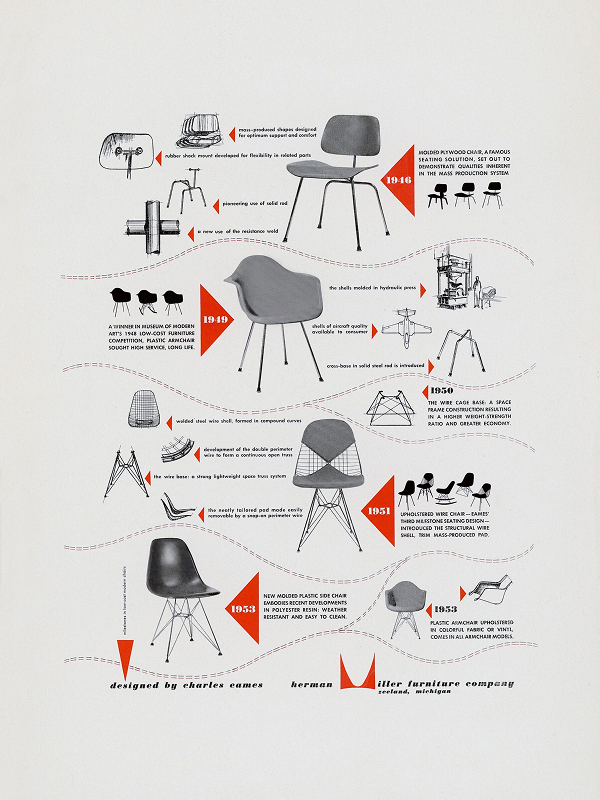
The first experiments with moulded plywood yielded beautiful work, but the complex curves of their envisioned form proved resistant to the material’s limitations. This led them to stamped metal, an approach that won them a place in the Museum of Modern Art’s 1948 International Competition for Low-Cost Furniture Design. Yet what looked promising in the prototype stage was ultimately too costly and complex to manufacture, undermining their goal of creating a truly accessible design for all.
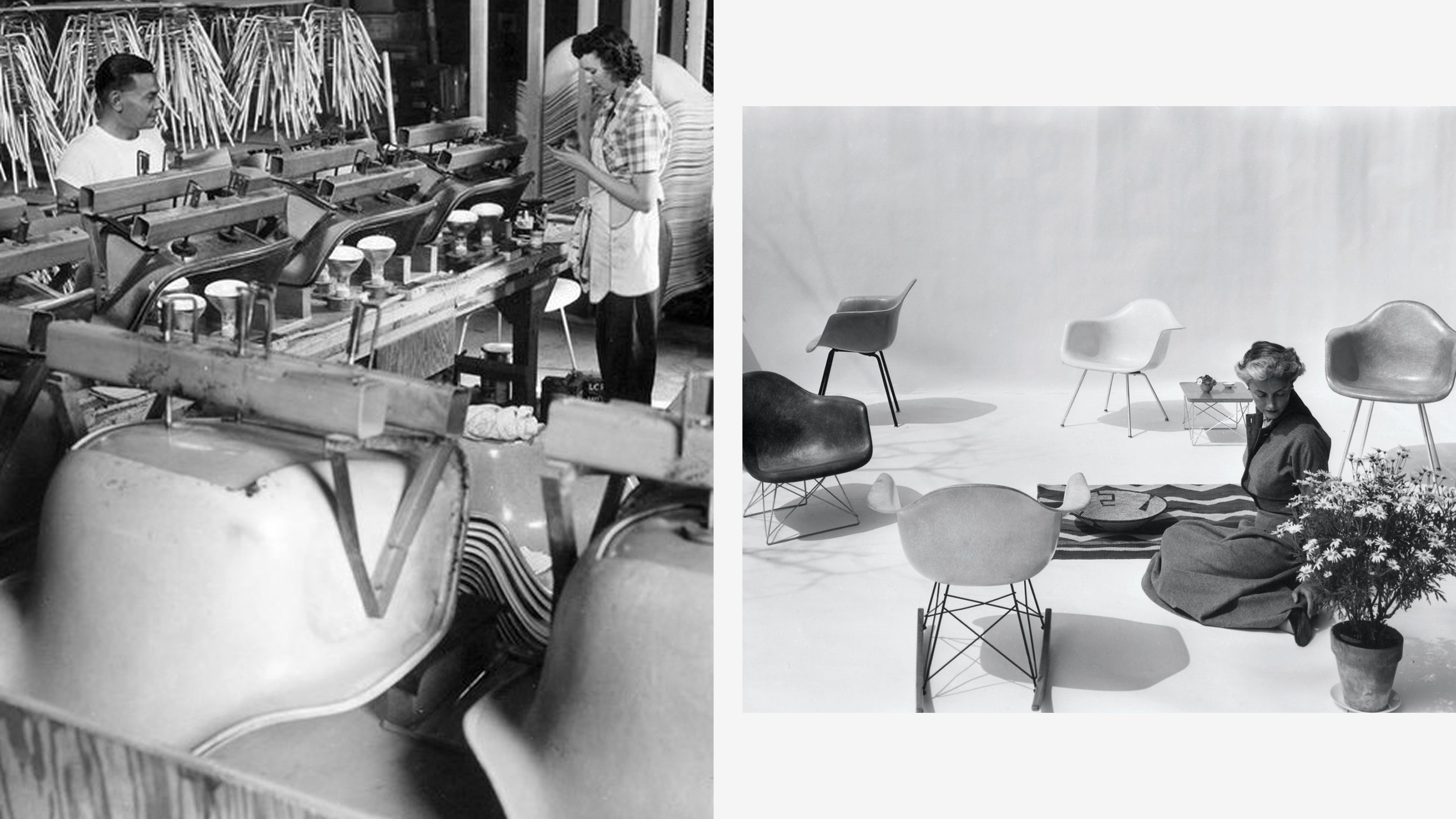
Rather than compromise, they pivoted again – this time toward a material almost unknown in furniture design: fibreglass. It was an unconventional choice, and it would ultimately transform the trajectory of modern furniture. Working in close partnership with Herman Miller, the Eameses refined the production process, creating a shell that was not only precise and comfortable, but could be manufactured at scale. In 1950, the world’s first mass-produced plastic chair was released – a landmark moment that reflected both their persistence and their openness to entirely new ways of thinking about materials.
Materiality without limits
From that moment on, the Shell Chair became a living experiment in material innovation. When the environmental hazards of early fibreglass became clear, production shifted to polypropylene – a material that preserved the form while improving safety. Years later, when technology allowed for a more sustainable and less hazardous version of fibreglass, the material returned. Along the way, the design was reinterpreted in bent wire, moulded wood, and recycled plastic, always with the same clarity of form.
In 2022, Herman Miller introduced shells made from 100% post-industrial recycled plastic – a decision that now saves an estimated 122 tonnes of plastic each year. This was more than an update; it was a continuation of the Eameses’ philosophy that good design is never static. It evolves with the world around it, always seeking a better way.
A single shell, a million possibilities
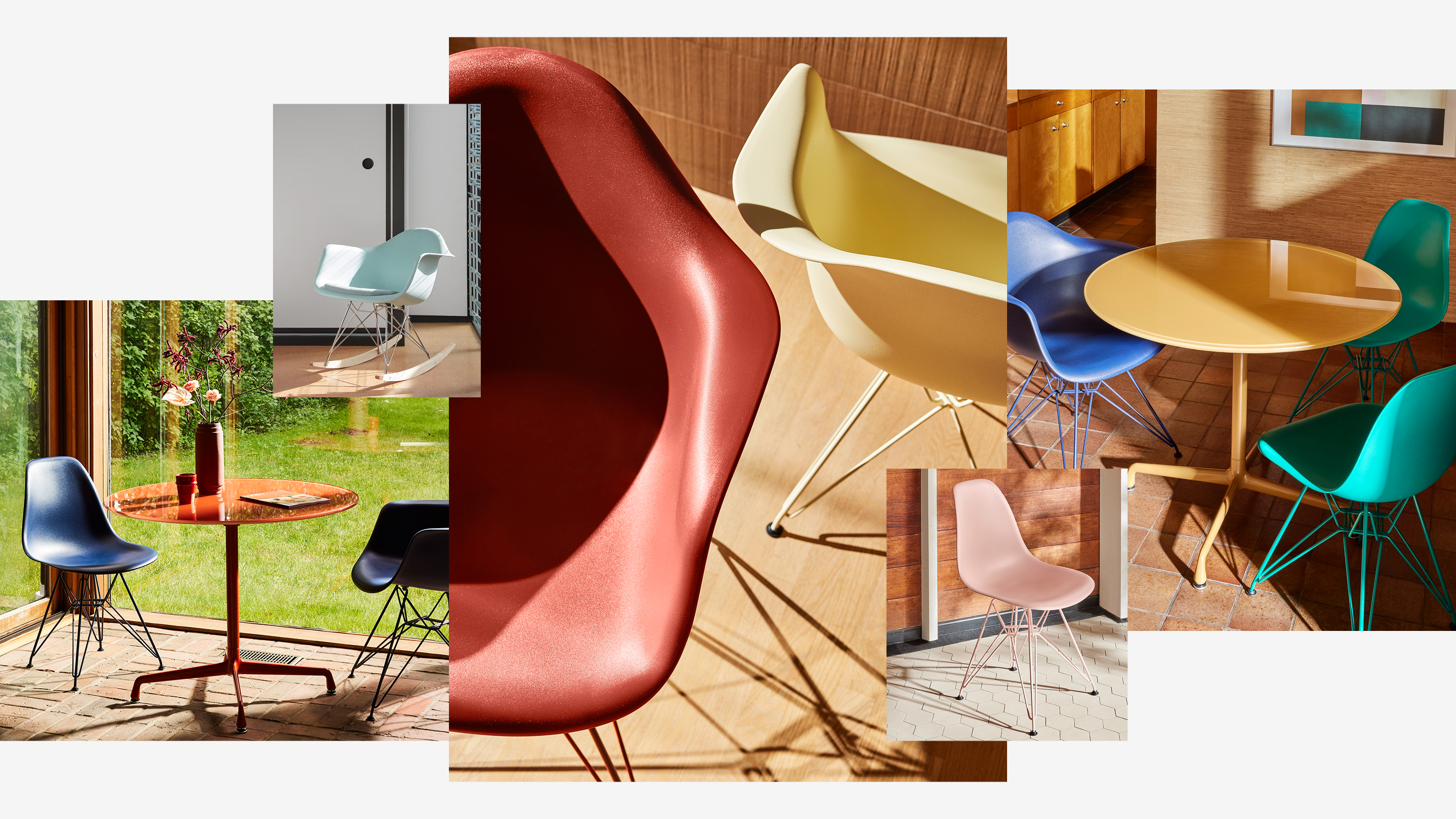
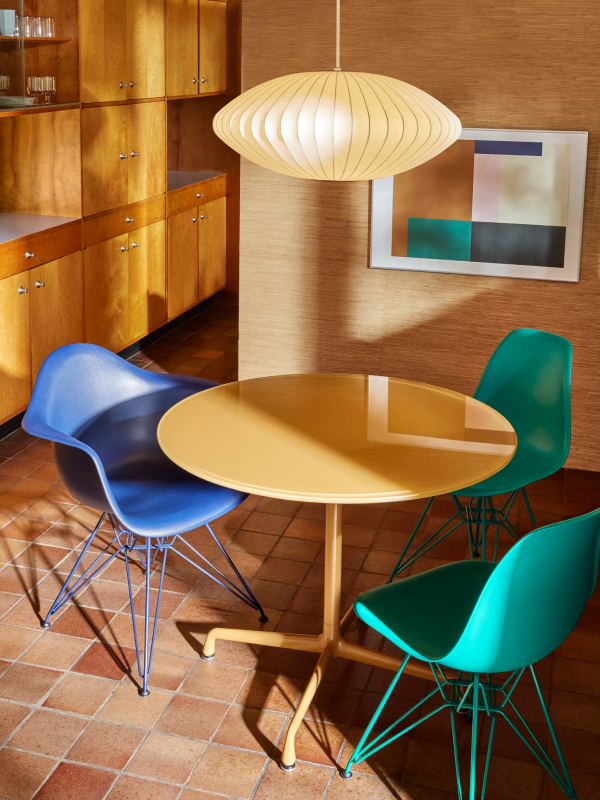
The Shell Chair’s adaptability extends far beyond materials. The original palette – joyful shades of lemon yellow, seafoam green, and red – reflected the Eameses’ belief that design should enrich life with both utility and delight. Over time, the colour offering expanded into an extensive library that ranges from vibrant tones to muted, timeless hues.
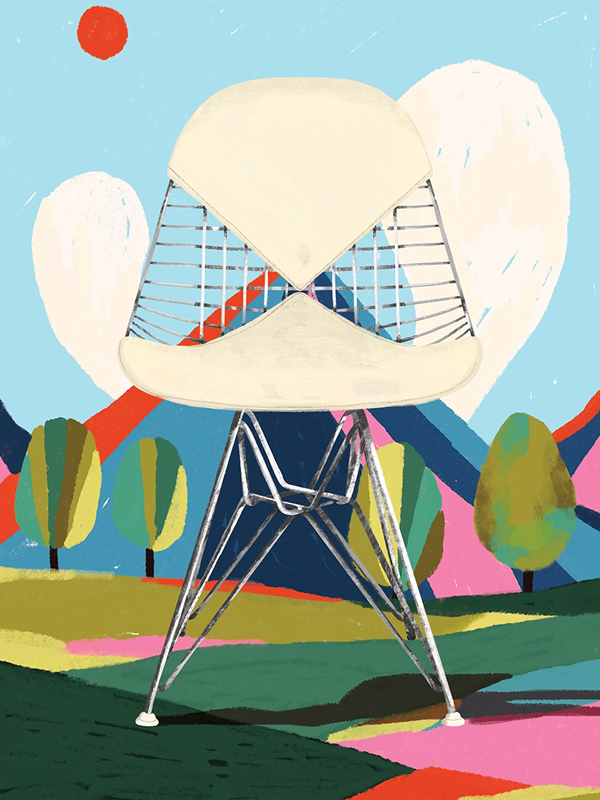
Functionally, the chair has embraced an extraordinary range of configurations. Multiple sizes, upholstery and seat pad options, and an ever-growing collection of bases – from the classic four-leg and dowel-leg designs to stackable solutions, whimsical rockers, and the iconic “Eiffel Tower” frame – have allowed the same essential shell to take on over a million possible forms.

This versatility has secured its place in almost every conceivable setting. In the 1950s, it was found in roadside cafés, early design-led retailers like California’s The Nut Tree, and even in tandem seating at Chicago’s O’Hare International Airport. In the decades since, it has appeared in classrooms, auditoriums, museums, lobbies, nurseries, offices, restaurants, galleries, and homes – from modest apartments to cultural landmarks. Its shape is constant, but its personality shifts effortlessly with each environment.
A worldwide celebration
To mark 75 years of this extraordinary design, Herman Miller has commissioned three acclaimed artists – Benjamin Critton in Los Angeles, Luis Mendo in Tokyo, and Tete Garcia in Sydney – to reinterpret the Shell Chair through their own creative lenses. Their work will be showcased in immersive installations across Herman Miller and MillerKnoll showrooms worldwide, including Australia.
Living Edge will celebrate the anniversary during Saturday Indesign, while a global “Shell spotting” campaign will invite design lovers to share archival finds, personal spaces, and untold stories that capture the chair’s enduring presence. From intimate snapshots to curated exhibitions, the anniversary will highlight what has made the Shell Chair not just a product, but a design language in itself.
Unrivalled simplicity
Seventy-five years after its debut, the Eames Shell Chair is still impossible to mistake – and impossible to better. It remains the embodiment of the Eameses’ adventurous ethos: clarity of concept, courage in execution, and a belief that a single, perfect shape can adapt endlessly without ever losing its integrity.