
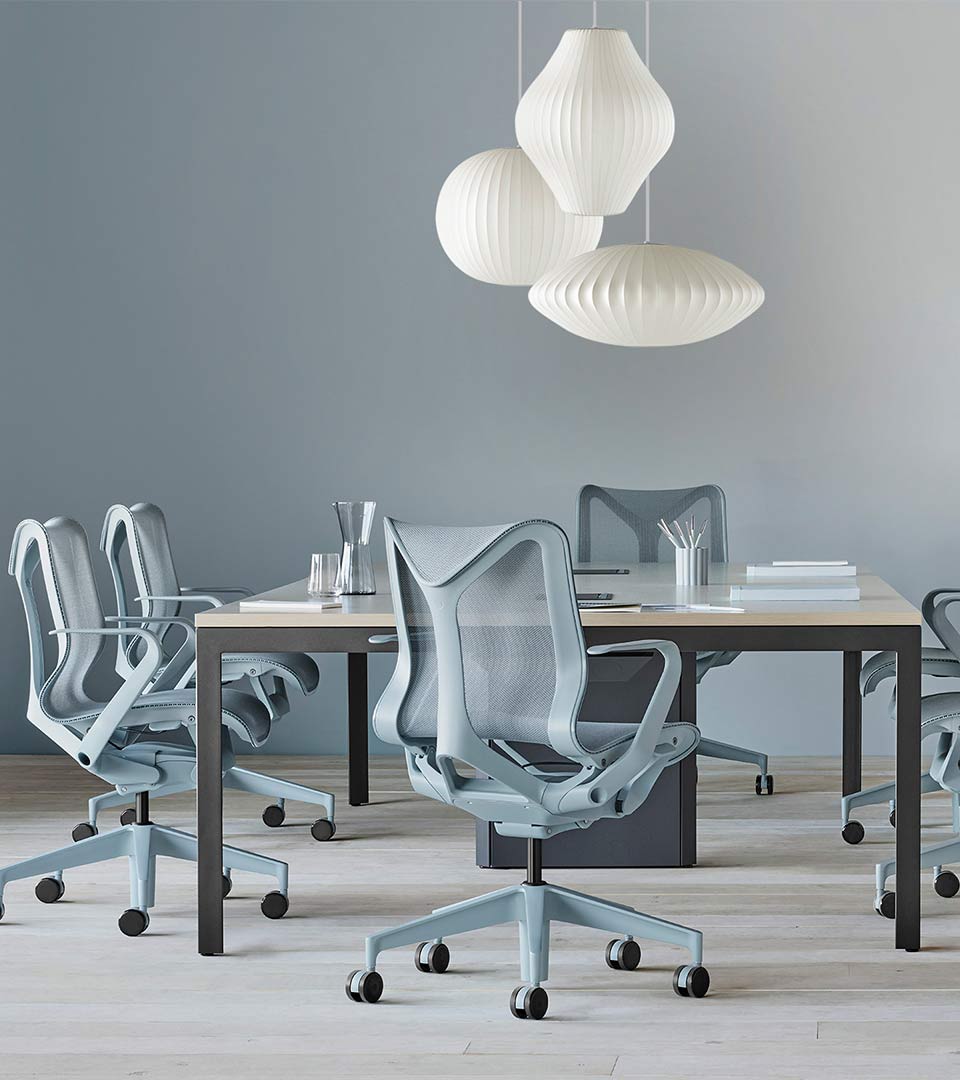



Herman Miller’s dining chairs reflect a modernist belief in clarity, function, and system-led design. Reflecting the brand’s philosophy, the brand developed an abbreviated way to catalogue its collection of world-class dining chairs. With Eames, you read the chair like a code.
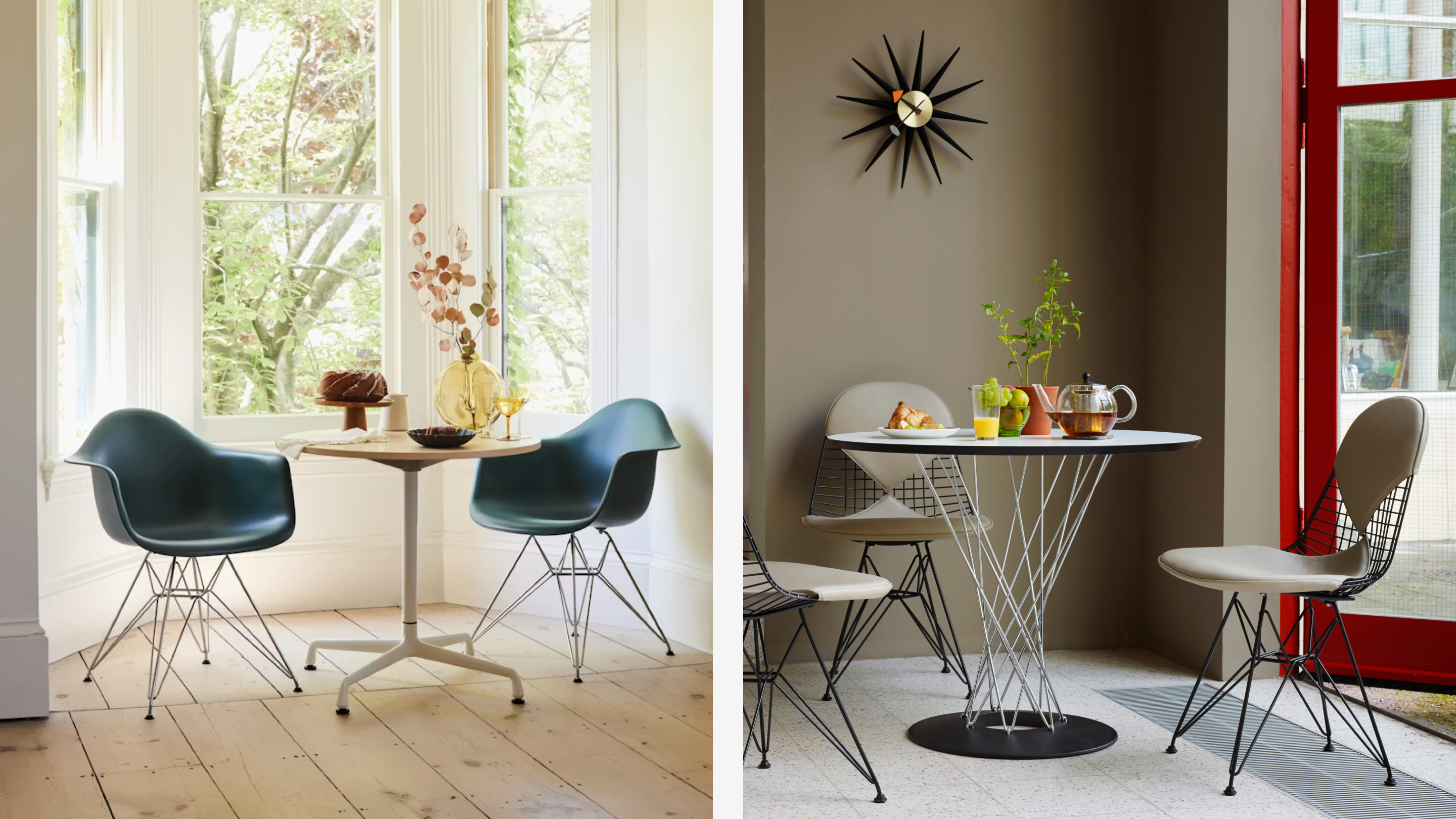
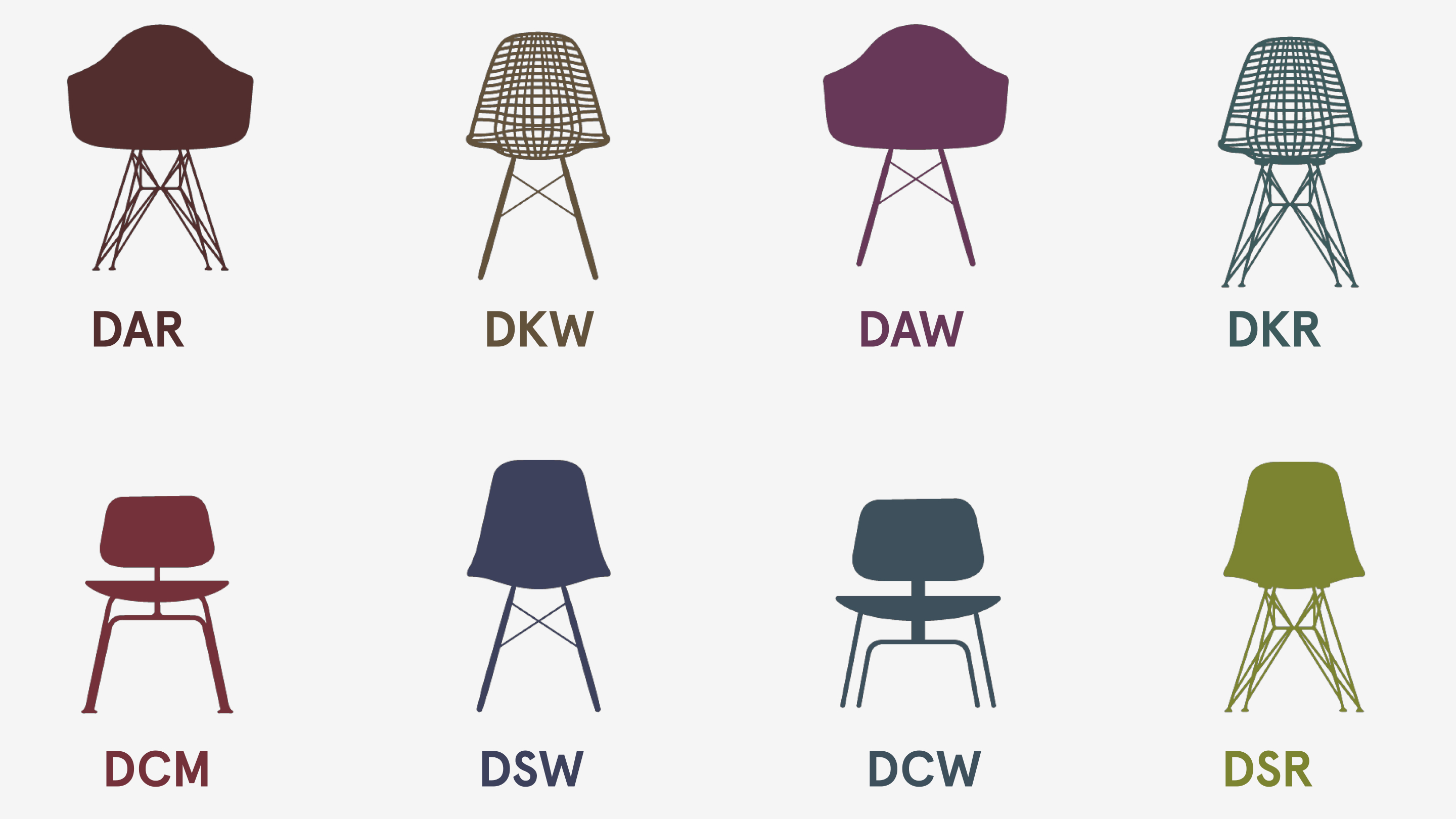
As the Eames catalogue grew, so too did the need for a shared design language, The letter–number system emerged in the late 1940s and 1950s as Herman Miller scaled production globally.
This prioritised clarity and consistency across collections, reflecting the Eames’ view of design as a system, not just an object. Over time, these codes became part of design culture, forming an insider language cherished by architects, specifiers, and collectors.
“The role of the designer is that of a very good, thoughtful host anticipating the needs of his guests.”
– Charles Eames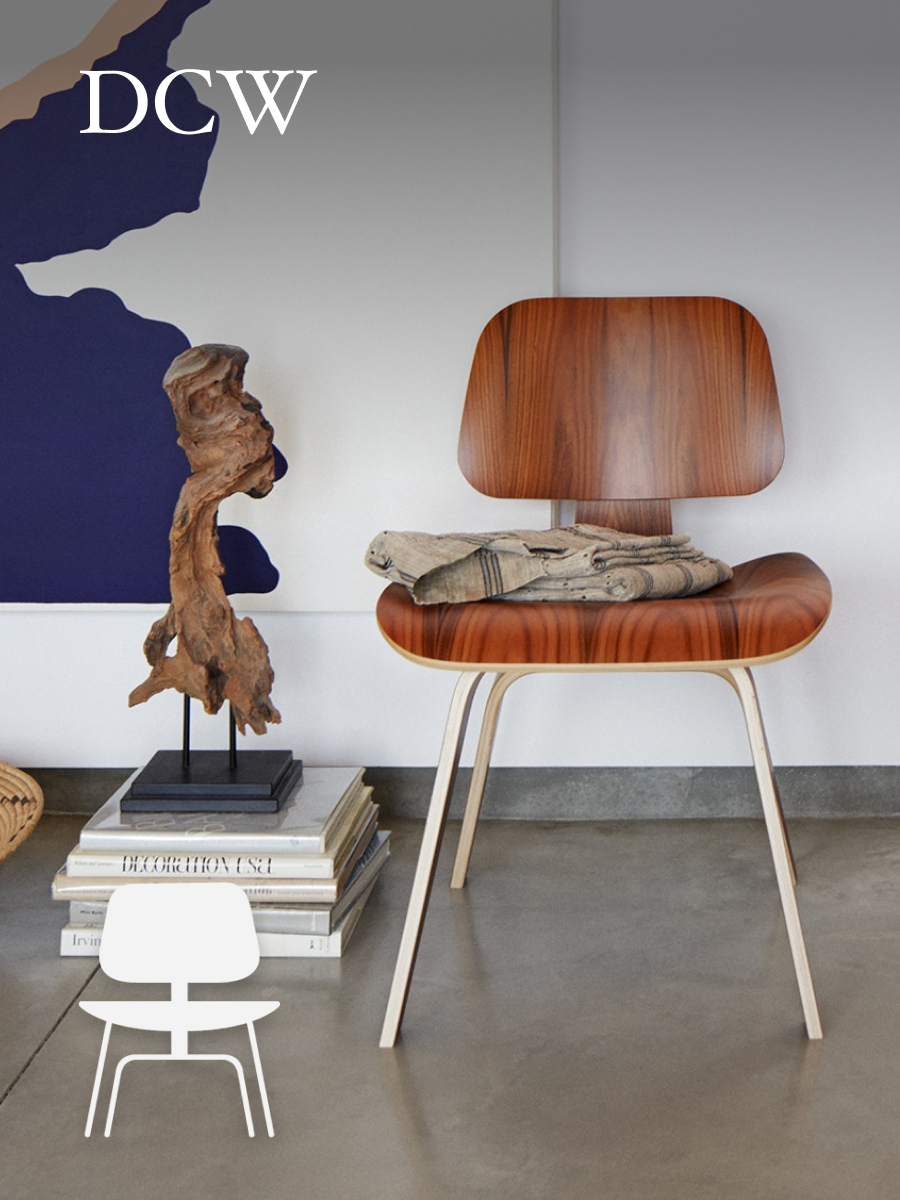
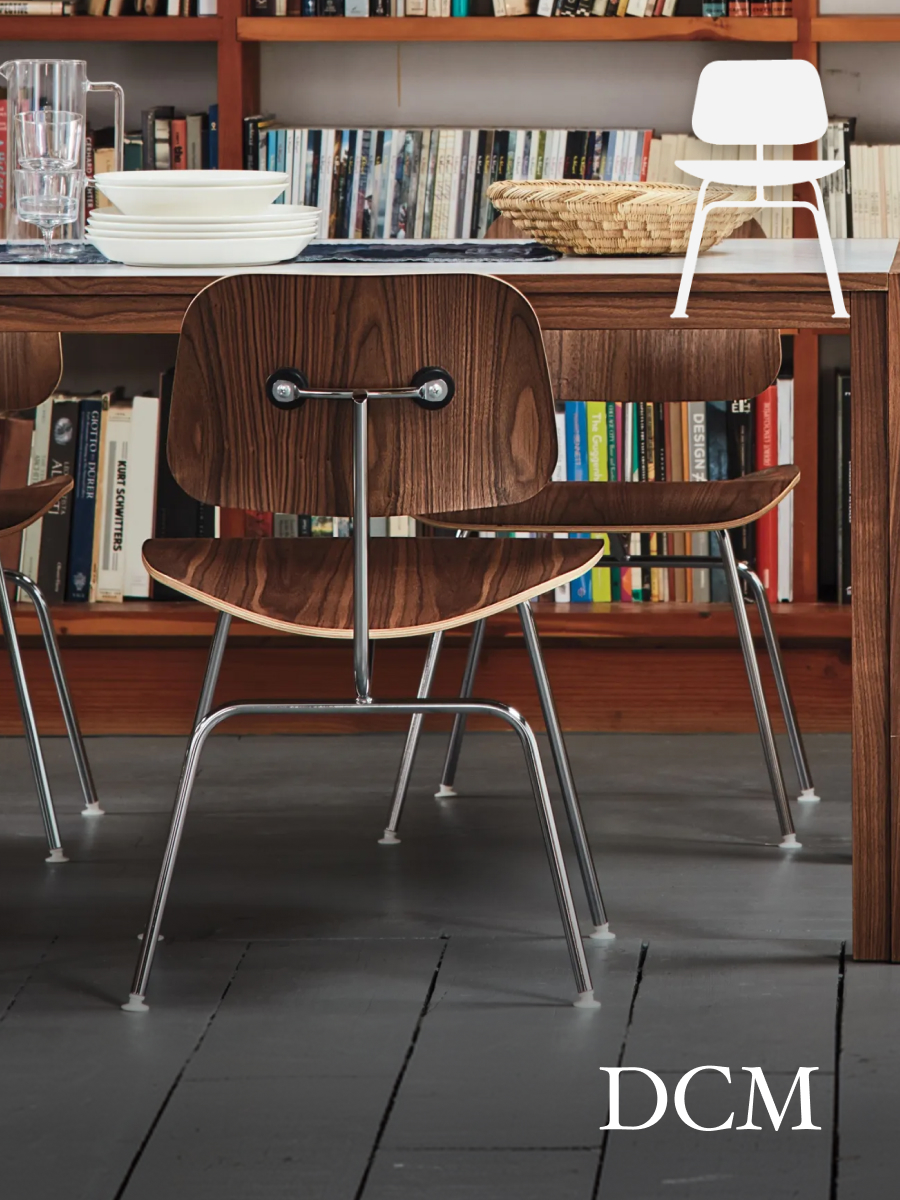
Recognised as "The Best Design of the 20th Century" by Time magazine, these chairs feature pioneering moulded plywood technology that bends wood to create a soft, body-contouring shape.
The DCW is crafted entirely from wood, expressing warmth, continuity, and the Eames’ pioneering approach to bent plywood construction. The DCM replaces the wooden base with a metal frame, introducing a lighter visual profile and a more industrial edge.
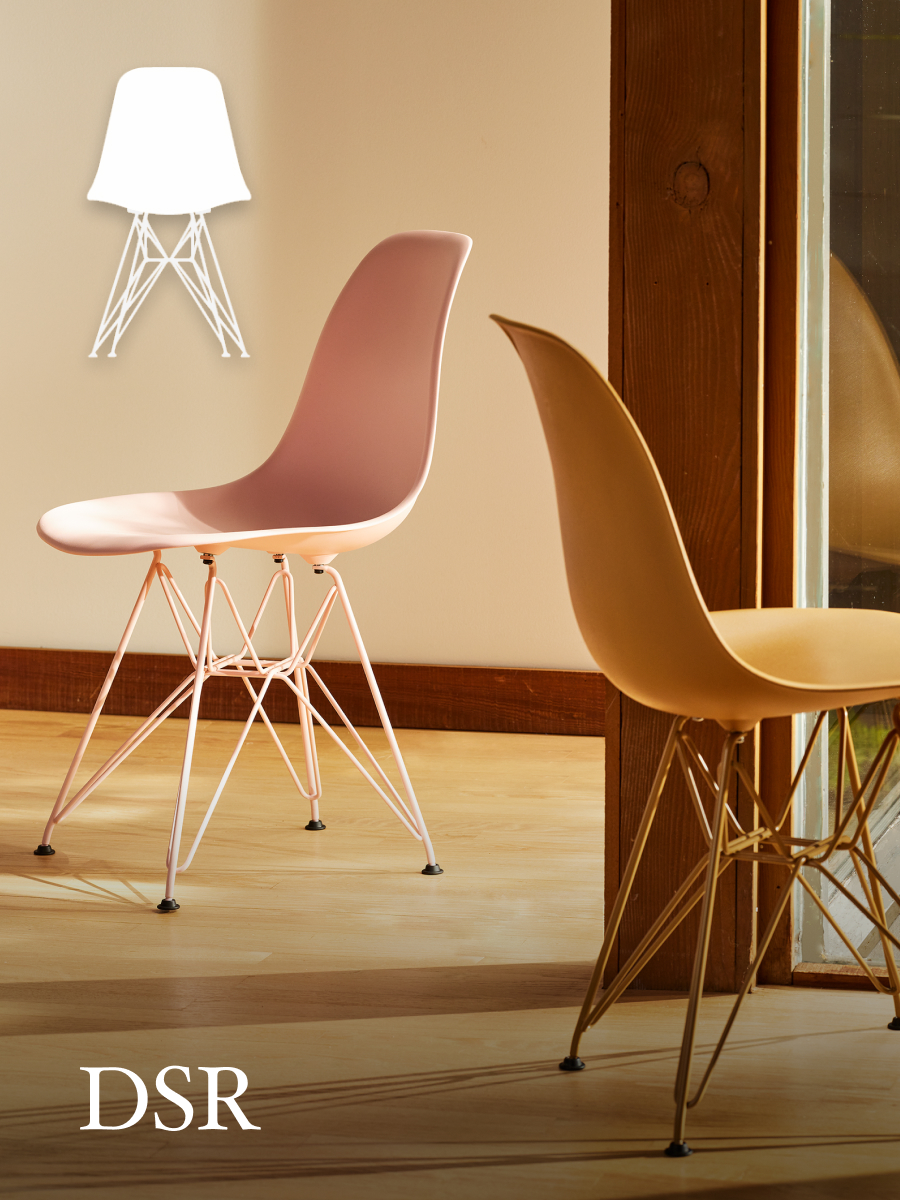
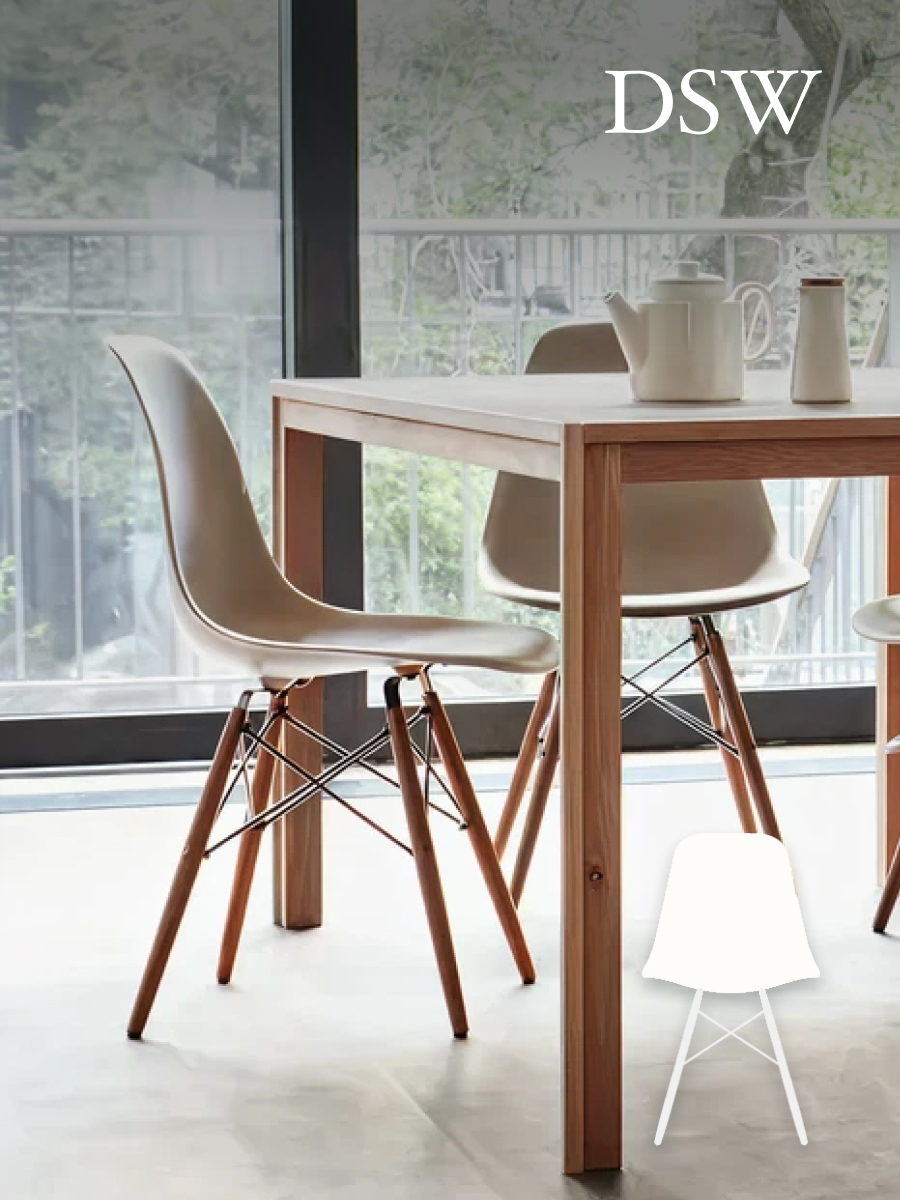
A sustainable update to the 1950 original, this chair combines a one-piece, sculpted shell with a variety of base options for a versatile, comfortable seat. Featuring a subtle matte texture, it’s now made from 99% post-industrial recycled plastic.
The DSR pairs the shell with a steel Rod or wire “Eiffel” base, creating a light silhouette with an architectural, industrial feel, while the DSW introduces a moulded wood base, adding warmth, tactility, and a more grounded, domestic expression.
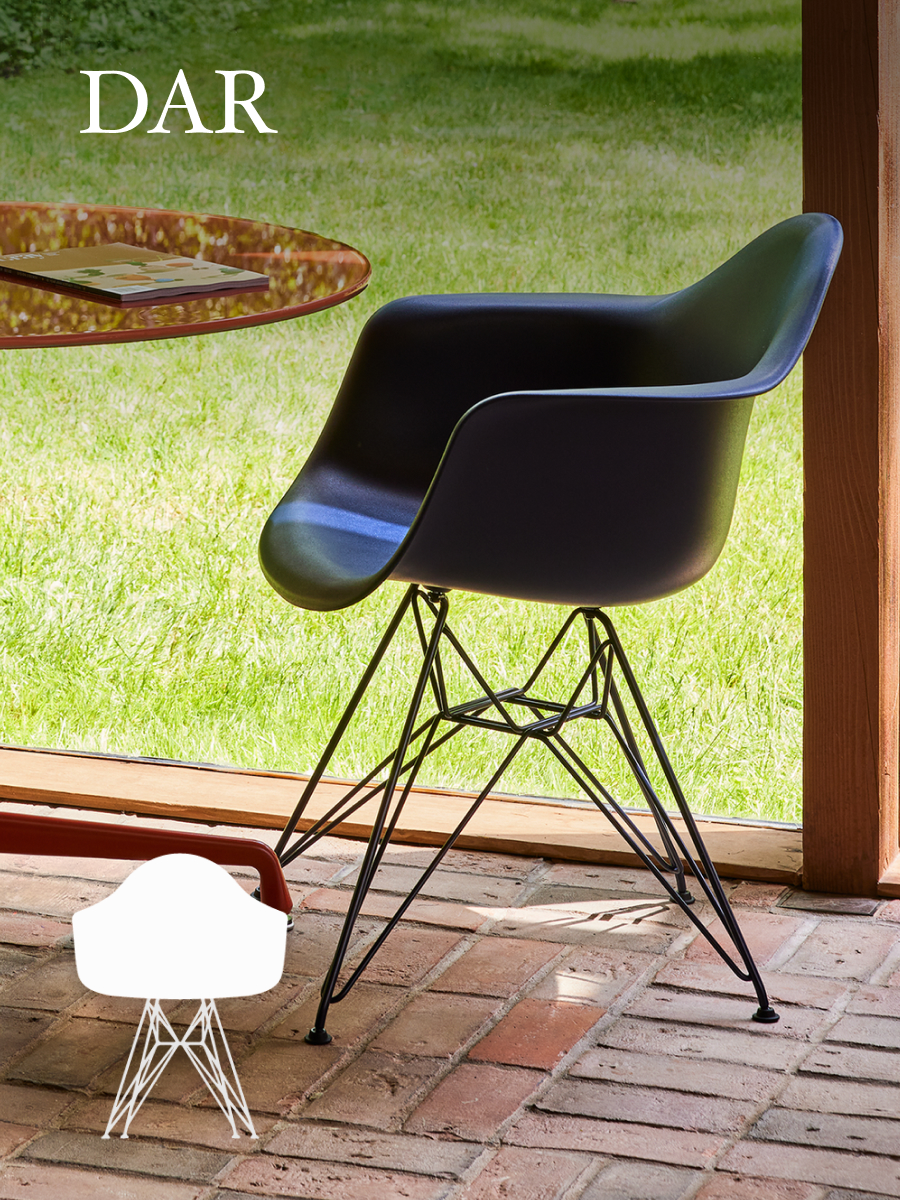
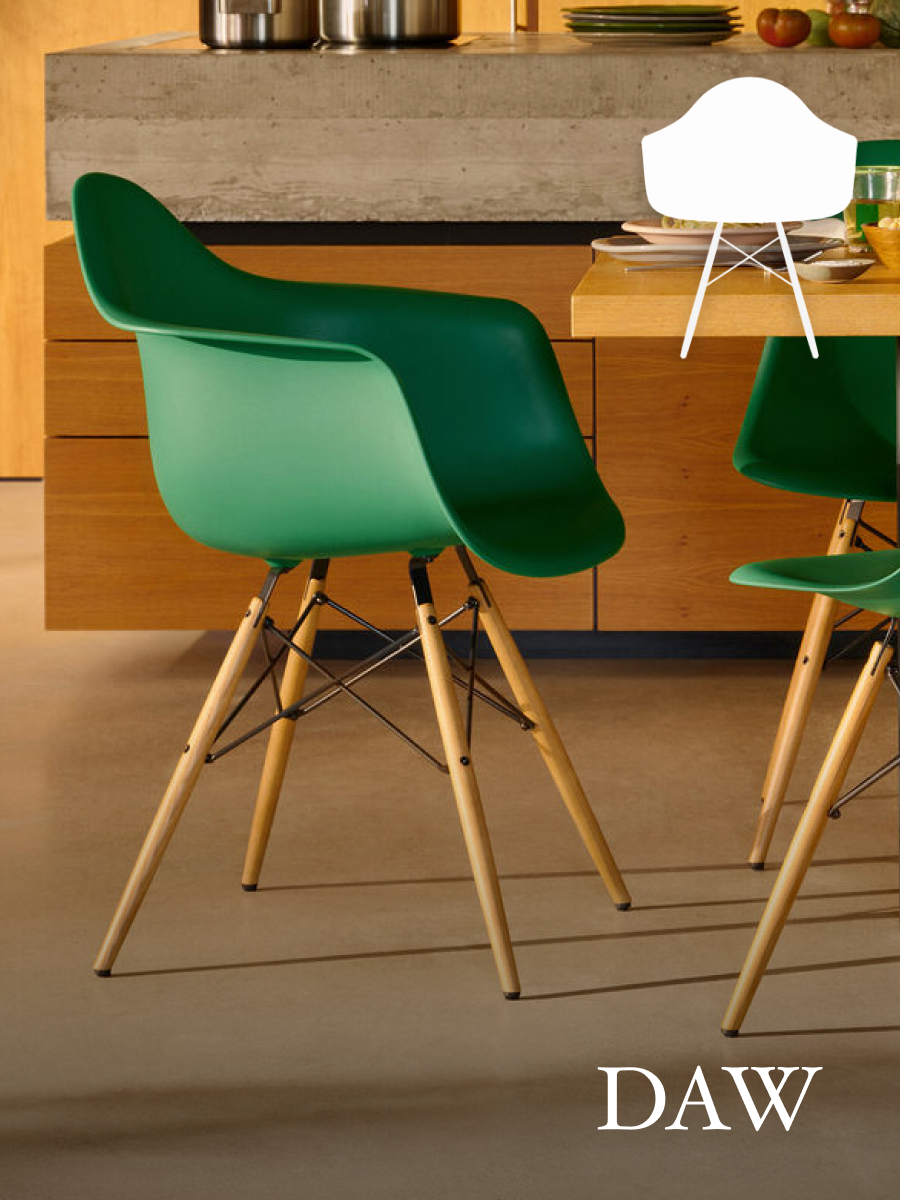
Introduced in 1950 as part of the Eames Plastic Armchair series, it was among the first fibreglass chairs developed for mass production. A simple, gracious form that fits any body and every place, the DAR pairs the moulded shell and integrated arms with a steel wire “Eiffel” base, while the DAW features a wood base instead.
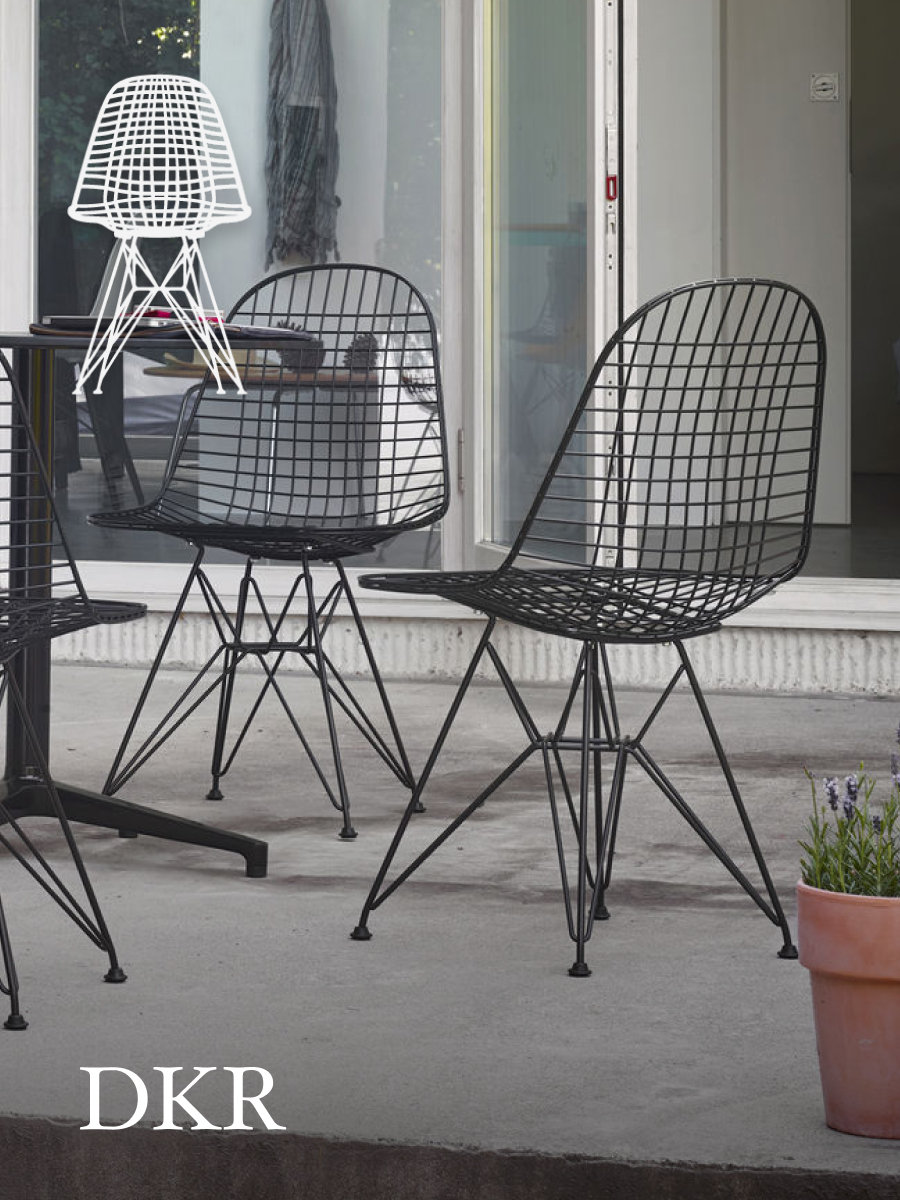
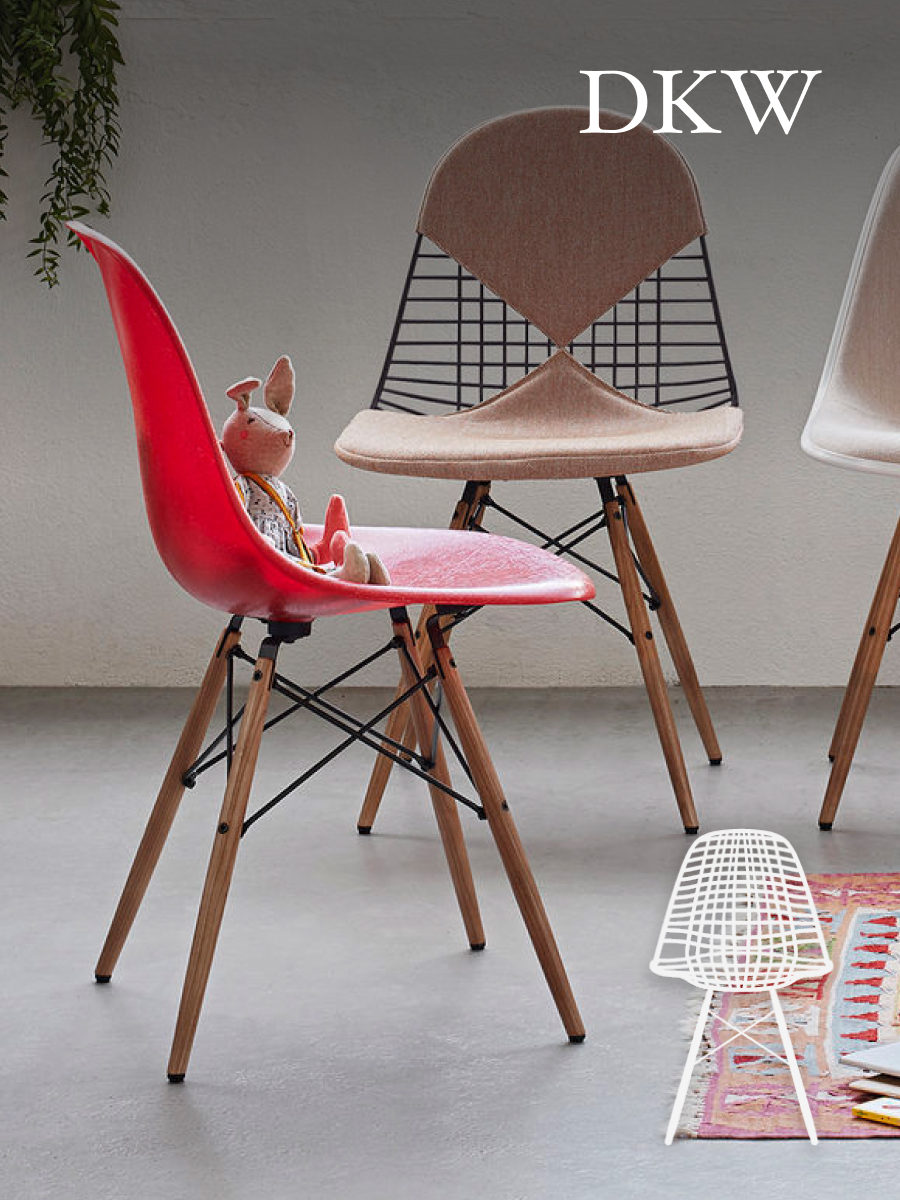
The Eames Wire Chair is an iteration in the shell chair’s evolution. The metal Eiffel-style rod base of the DKR has an architectural profile, while the wooden dowel base DKW offers a warmer feel. The chair comes with an optional full-piece leather seat pad or crisscross, two-piece “bikini” pad.
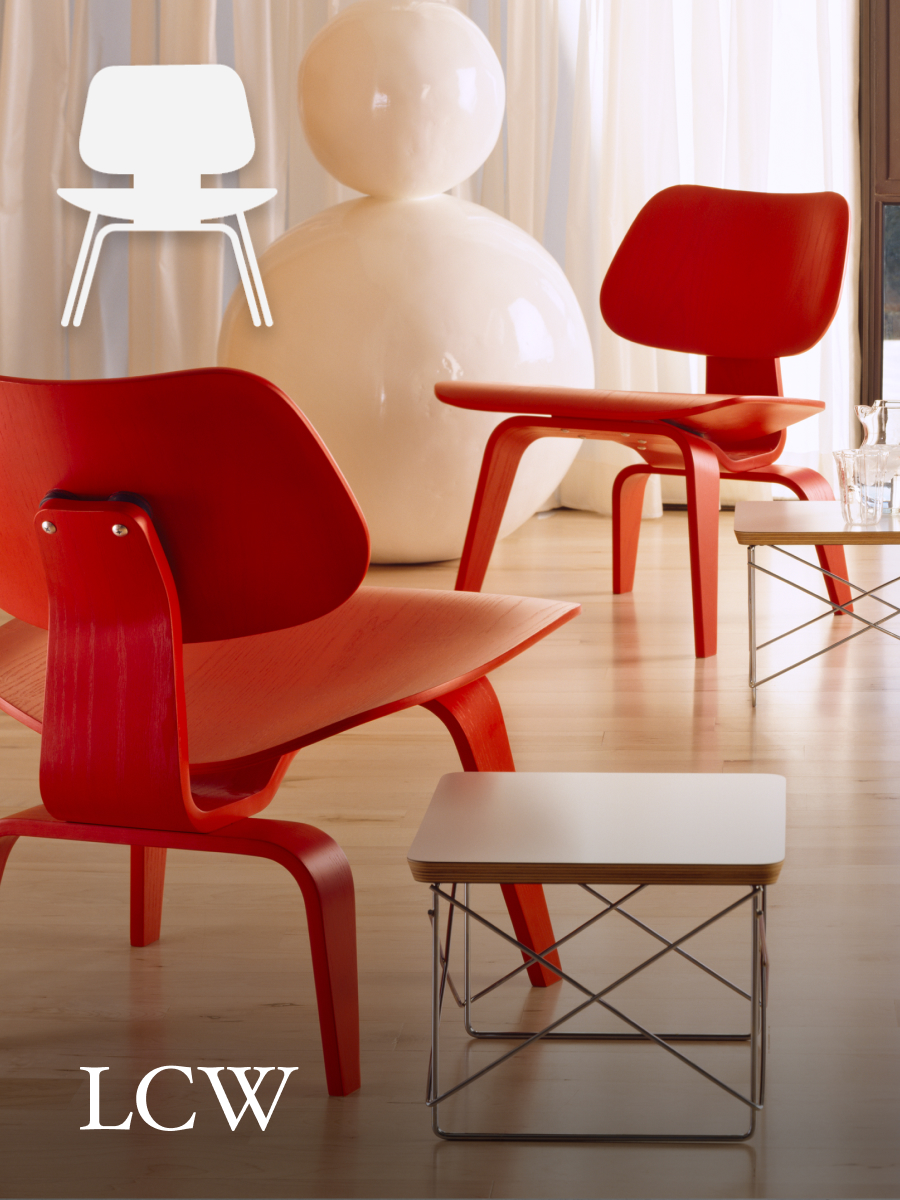
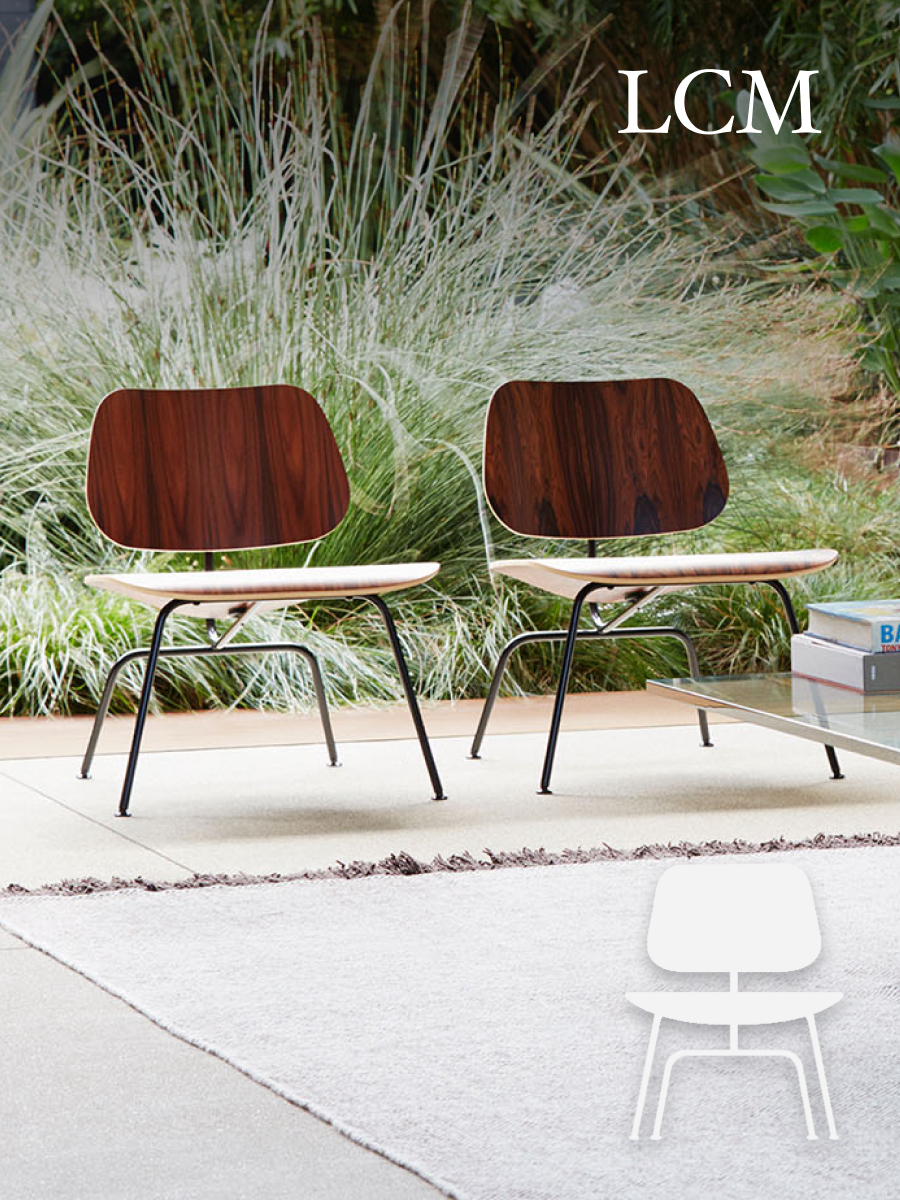
Designed as low, relaxed chairs the LCW is crafted entirely from moulded plywood, showcasing the Eames’ pioneering use of bent wood to create a warm, organic form that flexes subtly with the body. The LCM shares the same sculptural shell but replaces the plywood legs with a metal base, introducing a lighter visual profile and a more industrial character.
New Release
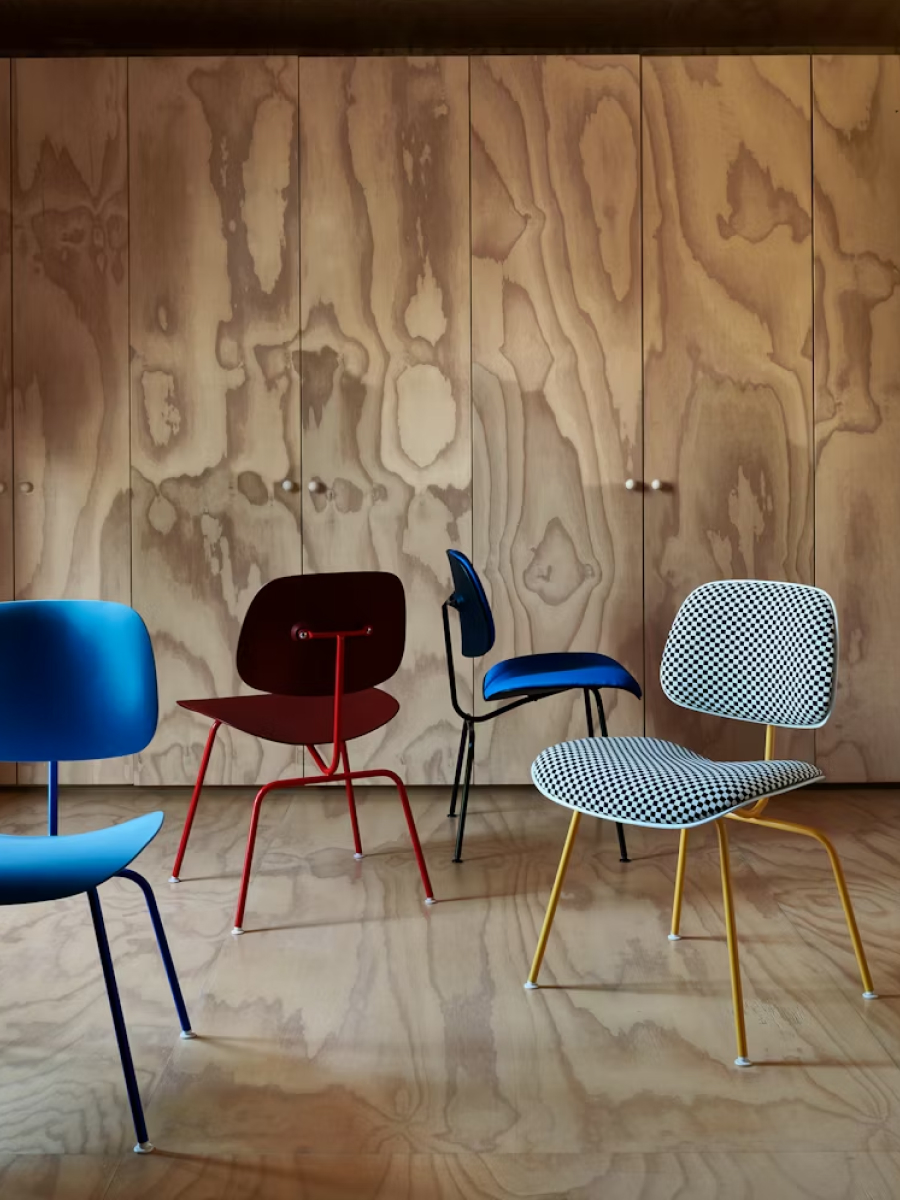
Eames Moulded Plastic Dining Chair
EC-127
Originally introduced in 1970 as a variation of the DCM (Dining Chair Metal), the EC-127 was informally known as the “upholstered DCM”. Made of reinforced plastic, the material allowed for a new shock-absorbing rubber and metal mount that was stronger—an innovation that continues to be used in Eames plastic chairs today.
The latest iteration on their classic from is crafted from 99% post-industrial recycled plastic, demonstrating how thoughtful design can reduce waste without compromising on aesthetics or strength. Available non-upholstered for the first time, the chair features vibrant powder-coated legs in an array of contemporary colourways.